 Skip to content


Wellness Blog



When Stress Shows Up In Your Body
Stress begins in the brain. Or at least, that's what conventional wisdom says. And maybe it does. Begin there, that is. Too much thinking. Too much worrying. Too many thoughts racing around in too little space. But the notion that stress is "all in your mind" is long past its expiration date and is in dire need of a serious upgrade. For example: Sometimes stress shows up in your shoulders. Your stomach. Your jaw. Your restless feet. Your inability to relax even when you are bone tired. That’s because stress is not just a thought. It’s a whole-body experience. And sometimes the most useful support is not something that knocks you out. It’s something that helps your body get the message that it is safe to stand down. Quick Answer Relaxing Lavender + L-Theanine combines two well-studied ingredients to support a calmer nervous system without leaving you sleepy, foggy, or checked out. It was designed for the moments when your body needs to unwind, but your brain still needs to function. At a Glance Stress can be physical as well as mental. Feeling tense, restless, overstimulated, or “wired but tired” may be signs that your nervous system needs a little help shifting gears. L-Theanine supports relaxed brain activity while helping preserve alertness and focus.2,3 Oral lavender has been studied for relaxation, stress support, and sleep quality.4–6 Relaxing Lavender + L-Theanine is designed for calm during the day and easier unwinding at night—not as a sedative or a conventional sleep aid. Why Stress Can Feel So Physical Your mind and body are not running separate stress programs. When your brain decides that something requires your attention, it sends signals throughout the body. Whether that is a genuine emergency, a packed calendar, a difficult conversation, or simply too much stimulation, your nervous system prepares you to respond. When your stress response kicks in, you may notice: Muscles tighten Breathing gets shallower Your stomach may feel unsettled You become more alert, more reactive, and less able to simply be still. That response is useful when you need to slam on the brakes, avoid a falling object, or get yourself out of danger. It is less useful when it stays switched on long after the danger has passed. And that is the problem for many of us. We are not necessarily having a crisis. We are just spending too much of the day physically braced for one. That is why a calmer nervous system can make such a difference. Not because it makes life’s demands disappear. Because it can help your body stop treating every demand as an emergency. Calm Doesn’t Have to Mean Checked Out For a lot of people, this is the catch. They would love to feel less tense, less reactive, and less as if their internal alarm system has been going off all day. But they do not want to feel drugged. They have work to do. Conversations to have. Decisions to make. Kids to pick up. A life to participate in. They don’t want to trade stress for sleepiness. That’s one reason L-theanine has attracted so much interest. How L-Theanine Supports Relaxation Without Sedation L-Theanine is an amino acid found naturally in green tea. It has been studied for its ability to support a relaxed state while helping maintain alertness and mental clarity. In other words, it is not about shutting your brain down. It is about helping it stop acting as if every email, traffic jam, and minor inconvenience is a five-alarm emergency.1,2 Researchers have also looked at L-theanine’s effects on alpha brain waves—patterns of brain activity associated with a relaxed but awake state. In one human study, a 200 mg dose increased alpha-wave activity within about 40 to 60 minutes.3 That is a very different goal from sedation. Sedation says, “Let’s turn the lights down.” Relaxation says, “Let’s turn the volume down.” One makes it harder to show up. The other may make it easier. And that distinction matters, especially for people whose stress tends to show up in the body first: tight muscles, restlessness, overstimulation, and difficulty winding down after a long day. Why Add Lavender? Most of us know lavender as a scent. A candle. A bath product. A sachet your grandmother kept in a drawer somewhere. But lavender is more than a pleasant smell. Oral lavender oil—particularly oil from Lavandula angustifolia—has been studied for its ability to support relaxation, a healthy stress response, and sleep quality.4–6 That does not mean lavender is a sleeping pill. In fact, one of the things that makes oral lavender interesting is that it may support calm without simply flattening you. The goal is not to make you feel dull or disconnected. The goal is to help your nervous system move out of that wound-up, over-alert state that makes everything feel harder than it needs to. Why Combine Lavender and L-Theanine? Relaxing Lavender + L-Theanine pairs 200 mg of L-theanine with French lavender oil in a once-daily capsule. Think of it as a two-part approach. L-Theanine helps support that relaxed-but-alert state. Lavender helps support the body’s ability to settle. Together, they are meant for the person who wants to exhale—but not disappear. The Same System That Keeps You On During the Day Can Keep You Up at Night Stress does not always respect business hours. During the day, it may make you feel tense, impatient, scattered, or physically unable to settle into what you’re doing. At night, it may look different—but feel strangely familiar. You finally have a chance to rest. The day is over. Nothing urgent is happening. And yet your body has not gotten the memo. Your mind may not even be racing. But you still feel a little activated. A little restless. A little too awake for someone who was dragging themselves through the afternoon. That’s the “wired but tired” experience. It is not a formal diagnosis. It is simply a phrase people use when exhaustion and activation somehow manage to coexist. And it makes sense. The nervous system does not have an on/off switch. It is constantly adjusting to the demands being placed on it. When stress has kept the system on high alert for much of the day, transitioning into rest may take more than turning off the television and hoping for the best. That is where a formula like Relaxing Lavender + L-Theanine may fit. Supporting Relaxation During the Day and at Night During the day, it is meant to support a calmer, more grounded state without interfering with focus or alertness. At night, that same support for relaxation may help make the transition into rest feel easier. Not because it forces sleep. Because it may help you become less physiologically prepared for battle at 11:30 p.m. Research on L-theanine and lavender also suggests that consistent use may support sleep quality over time—particularly when stress and difficulty unwinding are part of the problem.2,5,6 This Is Not Really a Sleep Supplement That may sound like an odd thing to say when we have just been talking about sleep. But it is important. Relaxing Lavender + L-Theanine is not designed to knock you out at bedtime. It is not a heavy-duty sleep formula, and it is not intended to replace the basics that make sleep possible: a reasonably consistent schedule, darkness, a cool room, and not treating your phone like it is a life-support device. Its real job is more fundamental. It supports relaxation. And relaxation happens to be useful at night. For some people, that may mean taking it when they feel tense or overstimulated during the day. For others, it may mean taking it in the evening, when they know they have a tendency to carry the day straight into bed with them. Either way, the point is the same: Calm the body. Keep the mind clear. And give your nervous system a better chance to do what it already knows how to do. What Kind of Stress Are You Dealing With? Not all stress feels the same. Sometimes it is mostly mental. Your thoughts are racing. You are replaying a conversation from three days ago. You are imagining fourteen possible future disasters, thirteen of which will never happen. That is one kind of stress. But sometimes the story is less about thoughts and more about your body. You feel wound up. Your shoulders are tight. You’re fidgety. You feel overstimulated by ordinary things. You can’t quite come down from the day, even when there is no particular thought you need to solve. That is the lane Relaxing Lavender + L-Theanine was designed for. Calm My Brain vs. Relaxing Lavender + L-Theanine BrainMD’s Calm My Brain is intended more for acute mental stress—racing thoughts, anxious mental chatter, and the feeling that your brain has too many browser tabs open. Relaxing Lavender + L-Theanine is aimed more at the body’s stress response: tension, restlessness, overstimulation, and difficulty unwinding. Of course, real life is not always that tidy. Sometimes the body is tense because the mind is racing. Sometimes the mind races because the body has been braced for impact all day. But it can still be helpful to ask a simple question: Is my stress mostly living in my thoughts—or mostly living in my body? If it is the second one, this formula may be worth considering. Calm My Brain Relaxing Lavender + L-Theanine Stress tends to feel Mental Physical Think Racing thoughts, mental chatter Tension, restlessness, overstimulation Primary focus Acute mental stress Relaxation without feeling sleepy What Should You Expect? The first thing to understand is that relaxation and sleep are not the same thing. How Quickly Does L-Theanine Work? You may notice a sense of feeling less tense, less physically “on edge,” or more able to settle within the first hour after taking it. Research on L-theanine suggests relaxation-supporting effects may begin within about 30 to 60 minutes.3 But that does not mean every benefit appears on a stopwatch. Stress resilience, nighttime relaxation, and sleep quality are usually more like fitness than like flipping a switch. Your nervous system responds to what you do consistently. For that reason, Relaxing Lavender + L-Theanine can be used as part of a daily routine—especially if you know that tension, overstimulation, or trouble unwinding are recurring parts of your life. How to Take Relaxing Lavender + L-Theanine One capsule provides 200 mg of L-theanine and 40 mg of Pharmako CPO® French lavender oil powder. BrainMD recommends taking one capsule daily, ideally on an empty stomach. You can take it during the day when you want calm without sacrificing clarity. Or you can take it in the evening when you are ready to begin letting the day go. The timing matters less than the purpose. You are not trying to check out. You are just trying to feel like yourself again. __________________________________________________ Frequently Asked Questions Will Relaxing Lavender + L-Theanine make me sleepy? It is designed to promote relaxation without making you feel sedated, foggy, or mentally checked out. L-Theanine has been studied for supporting a relaxed-but-alert state, which is why this formula can be used during the day when you still want to stay focused and present.2,3 Can I take it during the day or at night? Either. During the day, it may be helpful when stress is showing up as tension, restlessness, or overstimulation. At night, it may support a more relaxed transition into rest—especially if you tend to carry the day’s stress into bed with you. How fast does it work? Some people may notice a more relaxed feeling within the first hour. Research on L-theanine suggests relaxation-supporting effects can begin in about 30 to 60 minutes.3 Other benefits, including support for nighttime relaxation and sleep quality, may build with consistent use over time. Is it habit-forming? No. Relaxing Lavender + L-Theanine is a dietary supplement, not a sedative medication, and it is not considered habit-forming. Can I take it every day? Yes. One capsule daily can be used as part of an ongoing routine for nervous-system support, or when you know you are heading into a particularly stressful stretch. Can I take it with medications? If you take prescription medication, have a medical condition, or are under a healthcare professional’s care, check with your clinician before adding any new supplement to your routine. The same goes for anyone who is pregnant or breastfeeding. The Bottom Line You do not have to be in crisis to want to feel calmer. You do not have to be having a panic attack to notice that your body is holding too much tension. And you do not have to choose between feeling relaxed and being able to function. Sometimes the most useful kind of support is not the kind that makes you sleepy. It is the kind that helps you unclench your jaw, drop your shoulders, take a fuller breath, and move through your day without feeling as if your nervous system is one bad email away from sounding the alarm. That is what Relaxing Lavender + L-Theanine was designed to support: Calm for your body. Clarity for your mind. ___________________________________________________________ References Kimura K, Ozeki M, Juneja LR, Ohira H. L-Theanine reduces psychological and physiological stress responses. Biological Psychology. 2007;74(1):39–45. doi:10.1016/j.biopsycho.2006.06.006 Hidese S, Ogawa S, Ota M, et al. Effects of L-Theanine administration on stress-related symptoms and cognitive functions in healthy adults: A randomized controlled trial. Nutrients. 2019;11(10):2362. doi:10.3390/nu11102362 Kobayashi K, Nagato Y, Aoi N, Juneja LR, Kim M, Yamamoto T, Sugimoto S. Effects of L-Theanine on the release of α-brain waves in human volunteers. Nippon Nōgeikagaku Kaishi. 1998;72(2):153–157. doi:10.1271/nogeikagaku1924.72.153 Donelli D, Antonelli M, Bellinazzi C, Gensini GF, Firenzuoli F. Effects of lavender on anxiety: A systematic review and meta-analysis. Phytomedicine. 2019;65:153099. doi:10.1016/j.phymed.2019.153099 Chen TY, Hiyama A, Muramatsu M, Hinotsu A. The effect of lavender on sleep quality in individuals without insomnia: A systematic review. Holistic Nursing Practice. 2022;36(4):223–231. doi:10.1097/HNP.0000000000000528 Müller WE, Sillani G, Schuwald A, Friedland K. Pharmacological basis of the anxiolytic and antidepressant properties of Silexan®, an essential oil from the flowers of lavender. Neurochemistry International. 2021;143:104899. doi:10.1016/j.neuint.2020.104899 These statements have not been evaluated by the Food and Drug Administration. This article is for educational purposes and is not a substitute for medical advice. Talk with your healthcare professional before beginning any new supplement, especially if you are pregnant, breastfeeding, taking medication, or managing a health condition.
Learn more
Lavender Benefits: What Science Says About Lavender Oil, Stress, Mood, and Sleep
Lavender may do more than smell relaxing! Explore lavender benefits for mood, sleep, and stress, plus what science says about oral lavender oil.
Learn more
Cortisol Detox: Do You Need One?
Do you really need a cortisol detox? Learn how cortisol affects your brain and body, plus healthy ways to support your natural stress response.
Learn more
What Happens in Your Brain During Public Speaking
Why does public speaking make your heart race and your mind go blank? Learn what happens in your brain and body when all eyes are on you.
Learn more
How to Be Less Stressed & Feel Happier Each Day
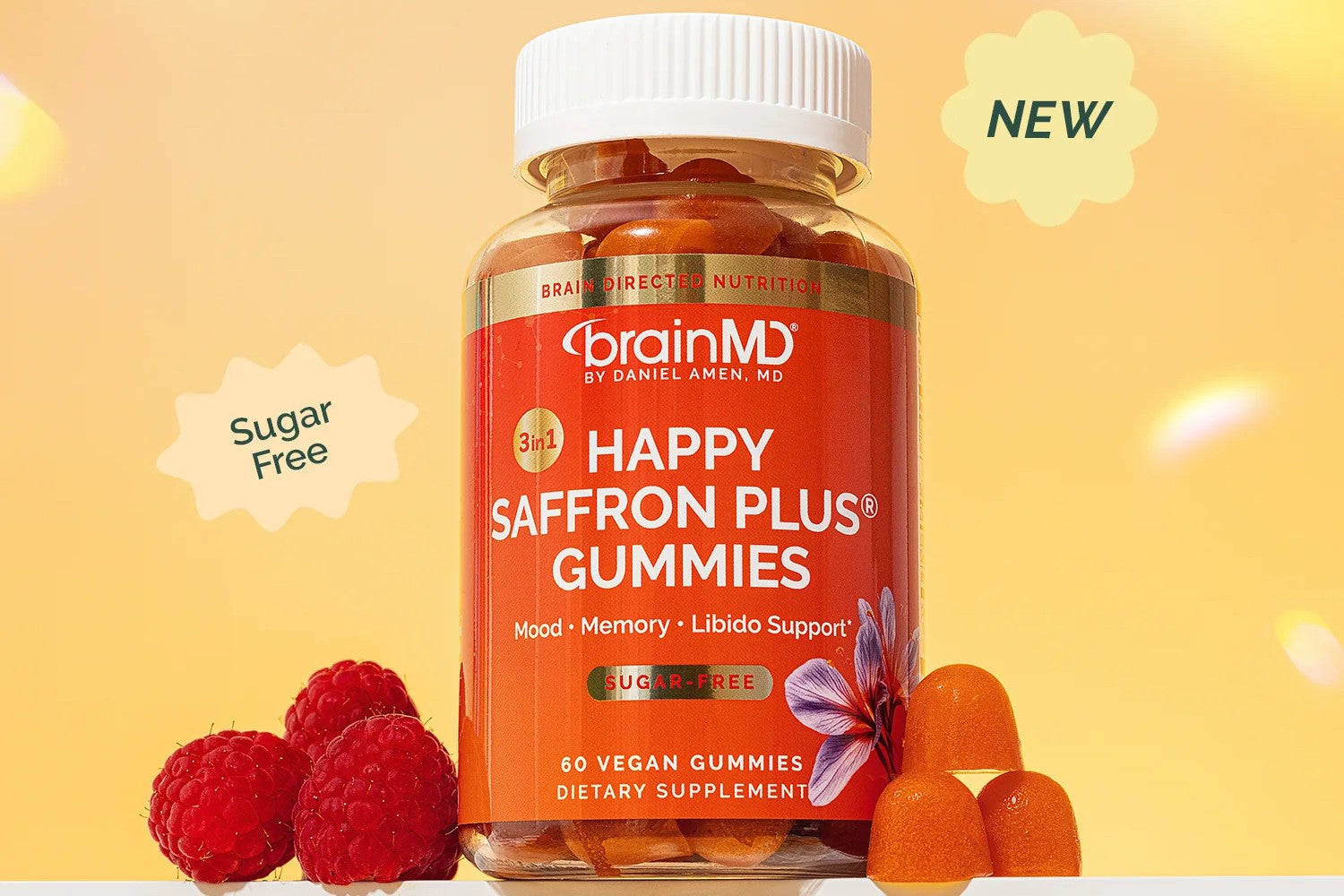
When the world stops, and your health, finances, and relationships are suddenly at risk, the stress can feel like it’s too much to handle. What can you do to keep negativity, sadness, anxiousness, and stress under control? Here are 6 strategies on how to be less stressed and feel happier. How to Be Less Stressed & Feel Happier Each Day 1. Plan for things to go wrong. If you’re the kind of person who expects everything to go perfectly all the time, you’re setting yourself up for disappointment and aggravation. When you train yourself to expect a few snafus, you’ll find that you won’t get as upset. Especially in situations where things are out of your control—like when the grocery store is out of toilet paper again!—planning for a few every day “fails” can keep you from falling into a funk. 2. Repeat positive mantras. Letting negative thoughts run wild in your head can create a tornado of stress, worry, and sadness. Directing your thinking to reaffirming mantras can help change your mental state. Repeat some soothing mantras that promote positive feelings, such as: I know we’ll get through this. I am confident that better days are coming. I am staying focused on what I can control. I think having more family time is a blessing. 3. Live in the present and plan for a better future. People who dwell in the past with regret tend to experience sadness and negativity. Those who anticipate the future with fear are wracked with worries. Practicing mental discipline to stay in the present can help keep your mind from spinning out of control. In a pandemic, think about the things you can do to protect your health—washing your hands, wearing a mask outside, wearing gloves at the grocery store—and feel good about your efforts. In addition, think of ways your life is going to change for the better from this experience and write it down. Seek out strategies to help prepare for post-pandemic growth. For inspiration, check out these episodes of the Brain Warrior’s Way Podcast, hosted by Dr. Daniel Amen and Tana Amen: How to Discover Your Purpose and How to Use Your Unique Value to Bring Money & Success with guest Lisa Sasevich, a business and sales expert. How to Create Energy to Help Transform Your Life with Julianne Hough from Dancing With the Stars How You Can Use Your Pain to Your Advantage with Dr. Derwin Gray, a former NFL player turned pastor and author. 4. Get moving. Decades of research point to the physical and mental health benefits of exercise. A 2019 cross-sectional study in Mental Health and Physical Activity found that getting some physical activity reduces the odds of experiencing depression in adolescence and anxiety in childhood and adolescence. And a prospective cohort study in a 2020 issue of The Lancet Psychiatry suggests that replacing sedentary behavior with light activity during adolescence could reduce the risk of depression. If you can’t get outside due to the pandemic, try dancing to your favorite tunes, do some jumping jacks, or walk laps inside your home. Any movement counts. 5. Eat right to think right. If you’re stuffing yourself with quarantine comfort foods like cookies, ice cream, and pizza, and taking part in Zoom happy hours, you’re increasing the likelihood of experiencing anxiousness, negativity, and worry. To help your brain handle the stress that’s surrounding us, you need to fuel it with great nutrition. Here are 3 of the most important eating strategies to help reduce stress, worry, and bad moods. Eat small amounts of high-quality protein at every meal to help balance blood sugar as research in Case Reports in Psychiatry shows that blood sugar highs and lows are linked to anxiety and depression as well as to irritability and anger. Include foods that are high in omega-3 fatty acids—such as salmon, avocado, and walnuts—which a 2018 review in Frontiers in Physiology suggested may help reduce anxiousness and negative mood. Stay hydrated with 8-10 glasses of total fluids per day since research in the journal Perceptual and Motor Skills shows that being even mildly dehydrated can make you feel more tense, depressed, confused, fatigued, or angry. 6. Supplement your diet with a dose of happiness. Among the most well-studied nutraceutical ingredients for mood, anxiety, and stress are: Saffron: A 2018 review or 7 studies in Neuropsychiatric Disease and Treatment found that saffron was more effective than a placebo for mood problems. In randomized parallel trials, 30 mg per day of standardized saffron extracts were consistently helpful for mood problems. Other studies suggest standardized saffron extracts can improve anxiousness. Curcumin: Studies have found that curcumin—not as turmeric root but as Longvida, a highly concentrated curcumin extract from turmeric, proven to be more efficiently absorbed—helps with mood challenges. Zinc: A review of existing studies suggests potential benefits of zinc supplementation—either when used by itself or when added into a personalized program for mood improvement. BrainMD’s Happy Saffron Plus combines all 3 of these potent nutraceutical ingredients to improve mood and help cope with anxious and stressful feelings. When you’re flooded with stress, it’s one of the tools you should have in your stress-relief kit. The following content was originally presented during a special Facebook Live event by Dr. Daniel Amen. Click here to view the full video. At BrainMD, we’re dedicated to providing the highest purity nutrients to improve your physical health and overall well-being. For more information about our full list of supplements, please visit us at BrainMD. References: Saffron Study Khaksarian, M., Behbahani, A. A., Rajabpour, M., & Hosseini, S. A. (2018). Comparative efficacy and safety of Crocus sativus L. (saffron) for treating mild to moderate depression: A meta-analysis of randomized controlled trials. Neuropsychiatric Disease and Treatment, 14, 1297–1305. https://doi.org/10.2147/NDT.S157550 Curcumin Study Cox, K. H., Pipingas, A., & Scholey, A. B. (2015). Investigation of the effects of solid lipid curcumin on cognition and mood in a healthy older population. Journal of Psychopharmacology, 29(5), 642-651. https://doi.org/10.1177/0269881114552744 Zinc Study Li, Z., Li, B., Song, X., & Zhang, D. (2017). Dietary zinc and iron intake and risk of depression: A meta-analysis. Psychiatry Research, 251, 41–47. https://doi.org/10.1016/j.psychres.2017.01.021
Learn more