 Skip to content


Wellness Blog



7 Tips To Help Your Kids Avoid Summer Brain Drain
Summer is here! However, along with warm weather, vacations, trips to the pool, and the Fourth of July comes a not-as-fun reality… the summer slide. Yes, there is actually a condition affecting school-aged children called the “summer slide,” which has nothing to do with a piece of playground equipment. Summer can take a real toll on a student’s knowledge and skills – from mathematics to reading development. In fact, research demonstrates that by the end of summer, students perform, on average, one month behind where they left off in the spring. Furthermore, other studies show that summer learning loss accounts for about 2/3 of the ninth-grade achievement gap in reading. What Can You Do To Help Your Children Avoid Summer Brain Drain? The focus is to avoid the “couch potato syndrome.” As parents, you want your kids to thrive and succeed, but the constant nagging “put down the cell phone, turn off the TV” can get really old. Instead of nagging, here are simple and FUN ways to help your kids develop the healthy habits that support them to be better equipped to succeed academically. Head To The Library – Your local public library likely offers a summer reading program that encourages kids, teens, and often adults to read over the summer. Educational, fun enrichment activities throughout the summer are often an important feature of the programs. Additionally, these programs typically involve incentives like prizes or tickets to sporting events. Plant A Garden – It is the perfect time to teach kids about planning, planting, and tending a garden. Your child will learn discipline and feel pride as they watch their plants grow and thrive. Caring for a garden also teaches them about responsibility and physically working a garden is a great form of exercise! If you are short on space, try a community garden or plant some tomatoes or spinach in a container. Keep Them Active – When your children are playing outside, riding their bikes or scooters, or are involved in an organized sport like Little League or gymnastics, they are engaging the bodies and minds. Kids who are sitting on the couch watching TV or YouTube are not. Physical activity stimulates mental activity and improves blood flow to the brain, so get your kids up and moving. Supplement Their Success – Alarming studies show that a high percentage of children eat less than the minimum daily allowance of many essential nutrients. Additional studies indicate that modern foods don't meet children's needs for these nutrients. Adding an expertly designed multivitamin/mineral supplement to their diet helps to fill any nutritional gaps. BrainMD’s Kids’ NeuroVite – science-based formulation provides generous amounts of nutrients for making energy (magnesium, the B vitamins), to support the brain's maturation (methylfolate, methylB12, choline), for vision (lutein, zeaxanthin), and many others to generally power healthy growth of mind and body. Cook With Them – This is one of the best ways to integrate math, reading and following directions with modeling healthy dietary choices. Let your child create the menu! Challenge your kids to your children to choose healthy foods in a variety of different colors, such as blueberries, spinach, pomegranates, yellow squash, and red bell peppers, at every meal. Help your child put together their favorite recipes in a cookbook. Explore Together – Let your kids research local museums, zoos, botanical gardens and any other cool stuff that your community offers. They can snap photos and even make a scrapbook about their adventure. Let the kids research a special animal in the zoo. Have each child pick a different topic to share with each other. You will be helping them subtly sharpen lots of skills, such as research, reading, and organization. Learn A New Skill – Find an age-appropriate interest for your child that he or she hasn’t tried before. It could be building a model rocket ship, learning to paint portraits, taking a pottery class, or discovering how to knit and crochet. When the brain is learning new skills, it is also staying sharp.
Learn more
7 Ways To Keep Calm While Preparing For Vacation
Now that summer is officially here, it’s that time of year again…VACATION! You’ve worked hard all year so it’s time for a break and time to relax. Time off is essential to personal wellbeing, professional success, business performance, and more, but nearly half of American employees don't use all of their vacation days each year! Research has even demonstrated that taking a vacation can have similar biological benefits to your health as meditating. In short, vacations are good for your health. So why don’t more people take vacations? Often the reason is that planning and preparing for a vacation is too stressful an experience. It sounds like extra work, having to prepare for vacation. It can be easy to get caught up in the stress of everyday life, even in the summer. How do you transition from a stress-inducing life to relaxation mode? It’s difficult to get into the right mindset, but you can more calmly prepare yourself for vacation if you follow a few simple steps: 7 of the Best Ways to Keep Your Vacation Prep Stress-free 1. Have Realistic Expectations Resist the urge to plan every minute of your vacation and maintain realistic expectations about your trip. Your flight could be delayed. It might rain the afternoon you plan to go jet skiing. Mishaps and meltdowns happen, but they don’t have to ruin a trip. If you expect that things will go less than perfectly, you will be better prepared to handle whatever does happen. 2. Focus On The Positive This can feel "easier said than done," but it's very effective. As mentioned above, a lot can go wrong when you travel. However, as with life in general, negative things won't feel like they have as much power when you notice the silver lining of the situation. For example, if your flight is delayed, focus on how you have extra time to catch up on reading a novel you enjoy. 3. Plan Ahead There is nothing more stressful than realizing the day before you leave that you still haven’t checked the oil level of your car, gone to the bank, bought the extra socks you needed, set up the timer for your house lights, or had your mail held. There are countless vacation preparation checklists available online – download one ahead of time and check items off to reduce your preparation stress. 4. Pack In Advance This might sound overwhelming, since you’re already stressed and still trying to get into the vacation mindset. However, it’s important to remember to work toward your goal of relaxation in advance or you might never get there! Make or download a packing list and begin to assemble necessary items with plenty of time to spare. That way you won’t find yourself running around like crazy the night before trying to get everything together. 5. Get Plenty Of Rest Speaking of the night before your vacation, make sure to get plenty of sleep so that you do NOT travel tired. Certainly, rushing to get everything done before your vacation can leave you worn out. However, navigating unfamiliar roads or airports will be much more difficult and stressful when you are sleep deprived. 6. Know What Works For You You may have heard the tip to clean your house while you’re packing for a vacation so that you aren’t stressed about a mess when you return. While some people might benefit from a little prep work beforehand, it won’t necessarily make re-entry easier for everyone. For others, the prep only adds more stress. The same goes for work. Many folks stress about doing extra work before leaving in hopes of cutting down on the amount they have when they come back. But it seems like there’s always a lot of work when you get back, no matter how you prep. Prioritize and focus on those tasks that have a deadline while you’re gone and put non-pressing items on the back burner. 7. Supplement To Manage Stress Natural relaxation substances can be incredibly effective in helping you manage your stress and feel more calm. Drink some spearmint or chamomile teas. Put dried lavender in a vase near your bed. Use calming essential oil aromas such as clary sage, bergamot, or ylang ylang. Try BrainMD’s Everyday Stress Relief – a nutritional supplement that can help promote a tranquil mind and body while supporting healthy adrenal and cortisol levels. It includes well-studied herbs and nutrients to support your body’s response to stress on multiple levels.
Learn more
Is It Better To Take Single Supplements Or A Combination Formula?
Twenty years ago, my sister, Joanne, brought my 7-year-old niece, Jennifer, to see me because she was struggling in school and had emotional outbursts. When I scanned Jen, I found she had a brain that was working way too hard. I tried many “traditional” interventions without any success, and my sister was calling me three times a week, upset about Jen’s behavior. Through my research, I discovered a combination of natural supplements that could help calm the brain and put her on them. Four months later I realized I hadn’t heard anything from my sister, so I called her and said, “Hey, don’t you love me anymore?” Joanne said, “Of course I do, and you won’t believe how much better Jennifer is doing. She’s getting straight A’s in school and she is MUCH easier to be around.” This was a very compelling experience that had a lasting impact on me. Now 20 years after Joanne brought Jennifer to see me, Jennifer graduated from law school and is doing great. There is no question in my mind that supplements can have powerful, positive effects. Initially, I recommended specific supplements and had my patients get them from their local health food stores. Over time, as I learned more about them, I wanted my own combination of ingredients and decided it was essential for us to have our own high-quality line. Most people don’t realize that your brain gets sick or ages in many different ways. The supplement industry is sort of famous for, “Take this one thing, and it’ll revolutionize your brain.” The latest thing is a jellyfish extract. And I came to realize over time, the brain doesn’t get sick in one way. And it won’t get better in one way. Single mechanism interventions, such as just taking single supplements like ginkgo or vitamin E by themselves, have NOT consistently worked in large scale studies to effectively promote and enhance optimal brain health. Therefore, in order to support your brain, it is absolutely critical to use multiple interventions that target different processes like blood sugar levels, gut health, inflammation, blood flow, and more. When we use smart combinations to fight the war for brain health on multiple fronts our effectiveness significantly improves. One such combination formula is BrainMD Brain and Memory Power Boost. This is the supplement formulated to help in our brain enhancement work with active and retired NFL players. When used in conjunction with a brain healthy program, we demonstrated significant improvement in memory, reasoning, attention, processing speed and accuracy. It was so effective that I take it every day. Brain and Memory Power Boost is formulated with seven brain boosters which help promote brain energy, support important neurons, and defend against free radical damage to the brain. Together they help power up mental sharpness and cognition so you can think fast on your feet again. Here’s what you get with Brain and Memory Power Boost: PhosphatidylSerine – a natural building block for cell membranes that supports healthy cognitive function Acetyl-L-Carnitine – an amino acid which helps protect against mental fatigue and can enhance mood N-AcetylCysteine – an amino acid that supports healthy cognition and mood as well as enhancing coping Alpha-Lipoic Acid – a potent antioxidant that protects against cell damage Ginkgo Biloba Extract – helps ensure reliable and sufficient blood flow to the brain Vinpocetine – works with Ginkgo to support healthy brain blood flow Huperzine A - improves the actions of the acetylcholine neurotransmitter system, which plays a central role in memory and behavior As you can imagine, if you purchased each of these supplements separately, it would cost you an astronomical amount! Not to mention the amount of time it would take to separate out and take each daily dose. The science behind using natural supplements grows stronger every year, but we must stop looking for single bullet treatments, and instead help the brain in all of the ways it struggles. This multiple-mechanism approach is what we used in our published brain rehabilitation study with football players, and it’s what we use to help the people who come to our clinics. “After a month on this supplement I noticed a difference. I have more clarity, focus and recall. This supplement really helps.” - Lisa “I love this product! I can notice the difference in my thoughts when I take the recommended dose and when I don't. My thoughts are clearer and sharper.” - Peggy “This is a great product to help me stay sharp when seeing patients. As a sports medicine physician, I need to be focused when injuries happen and be able to think quickly on my feet. Brain and Memory Power Boost is part of my pre-game.” - Dr. Z
Learn more
Omega Fatty Acids – Proper Ratio Is Key
The EPA - DHA Ratio Considering that on any given day, about 60% of the solid weight of your brain is fat – giving your brain plenty of healthy fat is kind of a (excuse the pun) no brainer. Your brain loves healthy fat and here’s why: fat plays an important structural role in your brain cell membranes as well as a vital role in how your cells function. For example, the omega-3 essential fatty acid docosahexaenoic acid (DHA) makes up a full quarter of all brain fat, and it’s the brain’s favorite fat for building membranes! Another omega-3 essential fatty acid called eicosapentaenoic acid (EPA) helps support mood and emotional balance. In fact, in a new research paper by Daniel Amen, MD and associates, researchers found that for patients with high omega-3 levels, blood flow in specific areas of the brain is increased. This indicates an association between higher Omega-3 index scores and overall better brain and cognitive health. Your brain NEEDS fat – just the right kind of fat. What Are Fatty Acids? Fatty acids are the building blocks of the fat in your body and in the food you eat. They have a variety of roles in the body. In addition to being the primary component of stored fat and serving as important building blocks of cell membranes, they also regulate inflammatory processes. Your body can synthesize most of the fats it needs from the diet. However, some necessary fatty acids cannot be synthesized in the body and must be obtained from food – these are called essential fatty acids. Only two fatty acids are known to be essential for humans: alpha-linolenic acid (ALA), the parent fatty acid of the omega-3 series, and linoleic acid (LA), the parent fatty acid of the omega-6 series. Having optimal omega-3 and omega-6 fatty acids lead to many healthy benefits. Omega-3 Fatty Acids The family of omega-3 fatty acids is comprised of at least 11 different types with complicated names like hexadecatrienoic acid (HTA), stearidonic acid (SDA), and eicosatrienoic acid (ETE). However, the three primary ones involved in human physiology are ALA, DHA, and EPA. ALA is mostly found in plants, while EPA and DHA are mostly found in animal foods like fatty fish. ALA, the most common omega-3 fat, is not biologically active in the body. It needs to be converted into EPA and/or DHA to become active, but this conversion process is VERY inefficient in humans. Research has found that omega-3 fatty acids are essential for optimal brain and body health. For example, according to researchers at the Harvard School of Public Health, having low levels of omega-3 fatty acids is one of the leading preventable causes of death. Deficiencies in these vital fatty acids have been shown to be associated with age-related cognitive decline, psychological disturbances, mood swings, and neuropathy (tingling in hands and feet). Similarly, these critical fatty acids are necessary for optimal immune response and supporting cardiovascular health, joint health, skin quality, vision, and wound healing. Omega-6 Fatty Acids Although omega-6 fatty acids are necessary, they can be harmful when you eat them in excess, so they’re both good and bad for your health. Omega-6 fatty acids are found in most vegetable oils (soybean, sunflower, safflower, corn, and canola), as well as in many fried foods, cereals, and whole-grain breads. Some of the benefits of omega-6 fatty acids are that they contribute to muscle health, support bone health, help reduce nerve pain, and act as a transmitter of nerve impulses. However, these health benefits are only realized when omega-6 fatty acids are eaten in moderation. Why You Need Both Omega-3 and Omega-6 Fatty Acids Appropriate ratios are key. Eating too much of omega-6 fatty acids is a problem because they cancel out the benefits of omega-3 fatty acids when the ratio of omega-6 to omega-3 is too high. The optimal ratio is 2 to 1 (omega-6 to omega-3), and not higher than 3 to 1. However, most people who eat the standard American diet, which contains high levels of omega-6-rich vegetable oils, have an appalling ratio of 20-50 to 1! Think of omega-6 as an accelerator—it hastens the creation of inflammation. Omega-3 is like the brake—it decreases inflammation. You need to be able to create inflammation, sometimes, in the right amounts and at the right times, such as when you are hurt or sick. However, if it goes too far and inflammation becomes chronic, it’s like having a slow-burning fire in your body that never goes out. It begins damaging the immune system, arteries, nerve cells, and organs. The best way to balance the ratio is to eat fewer foods that contain omega-6 fatty acids and more that contain omega-3 fatty acids, such as salmon, tuna, and seaweed. Unfortunately, even if you are eating a diet rich in foods containing omega-3 fatty acids, you are likely still not getting sufficient amounts of these crucial fatty acids that your body needs for optimal health (including creating an optimal ratio with the amount of omega-6 fatty acids you are consuming), so it will be important to supplement your diet. BrainMD Omega-3 Power provides highly purified omega-3 fatty acids at optimal dose levels from the most advanced production and detoxification.
Learn more
How To Choose Fish Oil That Will Help, Not Hurt You
What Does Fish Oil Do & Why is it So Important? Recently, it was determined that, after vitamin and mineral supplements, fish oil was the most popular complementary health product used by adults in the United States. According to the National Center for Complementary and Integrative Health (NCCIH), a division of the National Institutes of Health (NIH), more than 18 million people spent more than $1.3 billion on fish oil in the year 2012, the most recent year for which they have statistics. What Does Fish Oil Do? Most people know that the omega-3 fatty acids found in fish oil are good for their health and are likely aware about the benefits to circulatory health. But not as many people may know that omega-3 fatty acids are crucial for brain health. Fish oils, are oily fats found in fish, particularly cold water fish, and in marine oils from other sea life such as krill. These oils are rich sources of omega-3 fatty acids, one type of long-chain polyunsaturated fatty acids (LCPUFA) that are crucially essential for health. Are Fish Oil Supplements Good for You? In your diet, you will come across omega-3 and omega-6 fatty acids, Both are important for your overall health, and and you should find the right fish oil ratio for each one. The two most studied omega-3 fatty acids are eicosapentaenoic acid (EPA) and docosahexaenoic acid (DHA). These are essential for our health and well-being—our bodies need them for a diverse range of essential life functions. Though the body can make them from smaller omega-3 fatty acids, EPA and DHA are practically like vitamins in that the conversion efficiency is very poor. Though every cell in our body needs them, the only practical way to ensure we get the amounts of EPA and DHA that we need is through foods or supplements. Unfortunately, surveys indicate most people get far too little omega-3 fatty acids in their diet. The research consistently indicates that most Americans are not getting the EPA and DHA in their tissues that they likely require for optimum brain and body health, with some studies demonstrating that as many as 90% of adults have suboptimal levels. Many turn to fish oil supplements to help correct this deficiency. However, what they don’t realize (and this includes many health care practitioners) is that not all fish oils are created alike. How Do I Choose the Best Fish Oil? While the desired omega-3 fatty acids reside in the fatty tissue of fish, so do environmental contaminants. Therefore, oil derived from these tissues often contains high levels of these contaminants. This is why it's dangerous to consume fish caught in ocean zones that are contaminated. Fish (especially longer-lived species, and higher-level predators that consume other fish) will "bioaccumulate" heavy metals such as mercury, arsenic, cadmium, and lead that originated from industrial sources and reached the watery environments in which they feed. These contaminants often end up in the fish oil derived from these fish. Adverse effects to humans from ingesting heavy metals can include brain damage including memory loss, blindness, deafness, loss of coordination, irreversible liver and kidney damage, even death. In addition to heavy metals, there are also other toxic compounds that bioaccumulate in fish. Some of the most toxic chemicals known to science, including hundreds of different PCBs (polychlorinated biphenyls), PBBs (polybrominated biphenyls), dioxins and furans, can bioaccumulate in fish and have been linked to problems with the functioning of the brain, liver, immune system, endocrine and reproductive systems, and essentially all the organs. The PCBs, which have been extensively studied, besides causing the organ problems listed above, when bioaccumulated in humans even at very low levels can cause brain and other nervous system disorders, muscle spasms, skin problems, and chronic bronchitis. So, when looking for a fish oil supplement, it is critical that you find a product that has been highly purified. Sourced from short-lived fish species (anchovies, sardines, and mackerel) that are pelagic (don't feed on the bottom and therefore pick up less contaminants), the fish oil in BrainMD’s Omega-3 Power undergoes the most advanced purification process in the supplement industry. Fish Oil to Help Memory & Heart The ultra-high quality fish oil that goes into BrainMD’s Omega-3 Power is produced in a facility that is licensed to make both pharmaceuticals and dietary supplements. This facility is recognized by the FDA and certified for its cGMP (current Good Manufacturing Practice) by the rigorous USP (United States Pharmacopeia), NSF and other agencies. To ensure purity, BrainMD’s Omega-3 Power is tested to ensure lack of rancidity and for 450 potential environmental contaminants, including mercury, lead, cadmium, arsenic, and other heavy metals; PCBs, PBBs, dioxins, furans; and a diverse range of other organic pollutants. Fish Oil Reviews Here’s what our customers are saying: “The only fish oil I found that I can take because you take the care to purify it so well. Thank you so much!” by Carol “I think this product is great! I've compared the EPA and DHA amounts to other fish oils and this one has more than most that are out on the market.” by Steph “Effective & high quality! I've tried other omega-3 supplements & they've never quite settled well & didn't do much for my mood or energy. I feel a difference with these! Definitely worth the price.” by Elizabeth
Learn more
3 Part Series: How to Identify the Best Quality Supplements
In the previous post (Part 2), we discussed what you need to know about how your supplements are formulated and developed. But how much do you really know about the manufacturing programs and processes? In the third and last part of this blog series, we’re going to share with you the important features of supplement manufacturing and testing. Manufacturing Is that product you are considering manufactured in a GMP (Good Manufacturing Practices) certified facility? GMPs are the legal requirements for a sophisticated production system to ensure a dietary supplement product has the correct ingredient identity, strength, purity, safety, and process documentation that matches the content of its label. The processes for producing the product must be followed down to the finest details, testing must be conducted at various stages of the production process, and the documentation must be sufficient to be able to trace and isolate any problem that may occur. The cGMP (current GMP) regulations were developed by the Food & Drug Administration (FDA) to ensure that dietary supplements are manufactured to the highest quality possible from the available technology. You often hear people who are biased against dietary supplements say that dietary supplements aren't regulated, but FDA's stringent cGMP regulations are proof that supplements actually are thoroughly regulated. The FDA is the government agency that enforces GMP requirements all along the chain of custody of a dietary supplement product: from raw material suppliers through the manufacturer to the packager, and on through to the retailer, all are responsible for the quality of the product. FDA does unannounced inspections of all these parties. While they do not offer certifications for cGMP, they will issue warning letters and will shut down a party that fails to conform to cGMP requirements. Independent groups can be hired by a company to inspect their facilities and processes and provide GMP certifications. Among the services they provide are reviewing facility cleanliness and standard operating procedures, monitoring equipment calibration and operation, checking the production line for sources of contamination, verifying quality control overall and generally making sure the finished products' labels meet FDA specifications. When the FDA themselves perform an unannounced inspection of a facility that handles dietary supplement products and finds a GMP or other product quality problem, or inaccurate or otherwise illegal labeling, they typically give the facility 15 days to correct the problems. If the required changes are not made, the facility can be shut down and individual staff who knowingly defy the rules can be criminally charged and even go to jail. And FDA is not the only agency that regulates dietary supplements. Responsible parties in the dietary supplement industry must follow the legal requirements not just of the FDA but of the FTC (Federal Trade Commission, tasked with protecting the consumer against fraudulent marketing or other illegal trade representation), state public health departments, environmental protection agencies, and even California's Proposition 65 with its long list of toxic substances to avoid. All these regulatory agencies further help protect the public against unsafe or other illegal dietary supplement products. Testing It’s important to know that your supplements are tested for identity, purity, and potency. Testing is most effectively done on the raw material ingredients before they enter the chain of production. But in-process testing is also necessary, and the finished product must also be tested to ensure the integrity of the entire manufacturing process. Both ingredients and finished products must go through identity and potency verification, heavy metal testing, and microbial testing. All of BrainMD’s products undergo these testing processes, and we employ independent laboratories to do our testing. We also audit our manufacturers, packagers, and testing labs to ensure they have adequate quality control and processing standards in place. To protect your health and wallet, and to be confident you are getting the highest quality supplements, make sure you are buying products that are manufactured in cGMP certified facilities. Be vigilant! Be knowledgeable enough to sort the good from the bad. Supplements are an important part of your health regimen and you should be as well informed as you can be about what you're putting in your body. Your health and safety depend on it.
Learn more
3 Part Series: How to Identify the Best Quality Supplements
In the previous article (Part 1), we promised that we were going to teach you everything you need to know to buy the best quality supplements. In that first post, we explained some of the most important tips and insights on how to look at labels and claims made by supplement companies including ingredients, cautions and warnings, even marketing messages. In this post, Part 2, we discuss the science of how supplements are formulated and developed and what you should look for. Science-Based vs Fad Supplements If you want safety, efficacy, and reliability in your supplements, it’s important to know who created them — whether expert doctors, scientists, lab formulators or other individuals — and are they reputable? It’s also important (and legally required) that they have the data to back up the products they make. What studies have been done on the ingredients and formulation? Are they real human clinical studies, especially controlled clinical trials, or are they just animal or cell culture studies? If clinical trials were done, were they actually published in reputable, peer-reviewed scientific journals? Does the company use the ingredients that were actually researched in the clinical trials, or just cheap substitutes? Also, it’s important to know how the ingredients in a supplement work together because certain combinations can have positive or negative effects on digestion, absorption, and effectiveness. For instance, studies have shown that betaine (trimethylglycine) can increase the effectiveness of SAMe (s-adenosylmethionine). Look for references to studies done on the specific ingredient combinations. Then there are the fad supplements. Unfortunately you often see them on TV, claiming to have trials, though no such trials have been published. The makers of fad supplements can even stoop to adding drugs (pharmaceuticals) into their products labeled dietary supplements, even though this is expressly prohibited by the FDA and can cause serious harm. If the supplement maker can't show you controlled clinical trials published in peer-reviewed journals, proceed with great caution. Formulation Just because a product has a certain ingredient in it, doesn’t mean there is enough of that ingredient in each dose to feel the benefits. If you're interested in a product for some particular need you have, or even if you've already been using it, get yourself educated about its active ingredients and the minimum doses that are recommended by informed experts. These will be - should be - the doses that were effective and safe in the clinical trials. It's an open secret in the dietary supplement industry that many products have smaller-than-recommended amounts of ingredients, especially with ingredients that are expensive; to make it seem like the consumer is getting more for their money than some competing product. Some in the industry call this “dusting” with "Fairy Dust." Take fish oil supplements, for example. Many if not most of them don't provide sufficient omega-3 EPA and DHA for the consumer ever to get to levels in their cells that are going to be truly protective. Good dietary supplements provide safe and clinically effective ingredients in doses that have reasonable probability of creating benefits for people who take them. Reviews Online reviews can be extremely beneficial. When they're honestly done they can help you find out the good and bad experiences of actual customers who have already tried the product. Look for high numbers of reviews that seem to reiterate the claims on the product. This can give you great insight on the efficacy of the product. But do be aware that some websites, including well-regarded ones, pay people to create positive reviews. It can be a good sign to see some average or negative reviews, since one supplement won’t have the same effect for every person. Be aware when looking for independent reviews that there are also many blog sites that pretend to be impartial or even critical of supplements, but sometimes they just make veiled endorsements of supplements for which they get kickbacks. When you’re shopping for supplements, knowing how they are developed is a key factor in knowing if they are quality products and if they will make a difference in your health. Be sure to look out for Part 3 of this blog series, where we will discuss supplement manufacturing programs to help you determine which products have the best quality.
Learn more
3 Part Series: How to Identify the Best Quality Supplements
Are you wasting money on low-quality supplements? Or worse, is your supplement routine just not doing anything for you? Did you know that not all supplements are created equal and not all supplement makers can be trusted? It’s true! Americans love vitamins. More than half of all American adults take a vitamin or supplement. It’s a $27 billion-dollar industry in the U.S. With thousands of choices, it can sometimes be overwhelming to choose the right one for you. Plus, how do you know if you’re getting your money's worth or if you’re just getting ripped off? Unless you’re part of the development of a supplement, it’s becoming increasingly difficult to know if you’re getting trusted, quality products or if they’re delivering everything they claim. In this 3-part blog series, we’re going to teach you everything you need to know to identify the best-quality supplements. So you can get the maximum benefits from your supplements and reach your health goals. The 3 parts of this series are: Labels & Claims Supplement Development Manufacturing Programs Now let’s dive right into labels & claims: Claims Some labels make extravagant claims, but all too often the claims are a little hard to swallow. Before you buy a supplement, read the label, especially the Supplement Facts box that by law must list the ingredients. Carefully read the directions for use, and any cautions or warnings that follow them. Read the packaging, and any claims for efficacy and/or safety that are on the label. Be forewarned, supplement claims can be easy to misread and many supplement makers play games with the content of their labels. According to the Food & Drug Association (FDA), supplement makers are not legally allowed to make claims that their products treat, diagnose, prevent or cure diseases. The FDA does allow claims that a product affects the body's structure and/or function, nutritional status, or general health and wellbeing. But the product's maker is supposed to have proof to support all the claims they make. Ingredient lists The Supplement Facts box is the heart of the dietary supplement label. It's supposed to accurately list all the active ingredients, in specified order and with specified names for the various nutrients, herbals or other ingredients. Read this very carefully. You may notice, for example, that vitamin A is listed as beta-carotene, which many people do not efficiently convert to vitamin A. Or that magnesium is listed as magnesium oxide, which happens to be very poorly absorbed and is an inferior ingredient compared to magnesium malate, citrate or glycinate. Sometimes there'll be ingredients listed that aren't proven for use in humans. If you have doubts, contact the supplement maker, who by law have to provide their contact information on the label. It’s important to understand that outside the Supplement Facts box, companies have a lot of room to make vague claims on their labels. For example, the phrase “natural flavors” still allows for the product to contain sugars and other hidden and potentially harmful additives. At BrainMD, we ensure that our natural flavors are as pure as possible. We refuse flavors that use sugar or other high-glycemic ingredients, or hidden additives that are potentially unsafe. Another challenge for you is to detect and become knowledgeable about undesirable additive ingredients in your supplements, especially in the binders or coatings of tablets such as unnecessary sucrose, titanium dioxide which has questionable safety, hydrogenated oils, heavy metals including lead and mercury, and PCBs (polychlorinated biphenyls) or dioxins. Cautions and Warnings While it may seem counter-intuitive, cautions or warnings on products can be a good thing because they show that the company understands their ingredients and how they can affect the body. Cautions and warnings also indicate that the company places concerns about their customer's health and safety above making another sale. The caution or warning both prevents the sale of a product to someone that should not be taking it and allows the product to get into the hands of consumers who can safely take it. Marketing You’ve almost surely heard the saying, “Don’t believe everything you hear.” Well, that rings even more true for the supplement industry. We can start by asking ourselves some common sense questions. Does the supplement company make reasonable promises or do they make claims that are too extreme to believe, for example that a supplement can cure Alzheimer's or cancer? Outlandish claims in marketing materials can be an indication that the company is over-promising to try to gain sales. Look for realistic statements about a product for “supporting”, "promoting" or "enhancing" specific structures or functions. People’s bodies work differently, so supplements are rarely one size fits all. A supplement that works wonders for one person, might not work for another. Therefore it's important to examine the product's label or support documentation for evidence that it's ingredients (some of them, at least) have been put through controlled human clinical trials, which are the highest level of proof that they possibly could work for YOU. That’s also why a company’s return policy is important. If a supplement company allows returns and even guarantees their products or your money back, that is a good sign of trust. Look out for free product trials. The sponsoring company will say this shows their confidence in their product’s effectiveness. But read the fine print and make sure they are being upfront about what kind of arrangement you’re getting into. Most free trial programs automatically turn into a membership program unless you cancel, but some companies don’t put that information upfront and don't take measures to make sure you agree to the deal in advance. To make better buying decisions about dietary supplements, and to have the best chance the products you purchase will improve your health and well-being, you need to know first, that what the company claims on the label is accurate and reasonable; second, that the ingredient list is transparent and clearly understandable; and that they stand behind their products enough to make you feel safe and confident to shop with them.
Learn more
What’s Keeping You Up At Night?
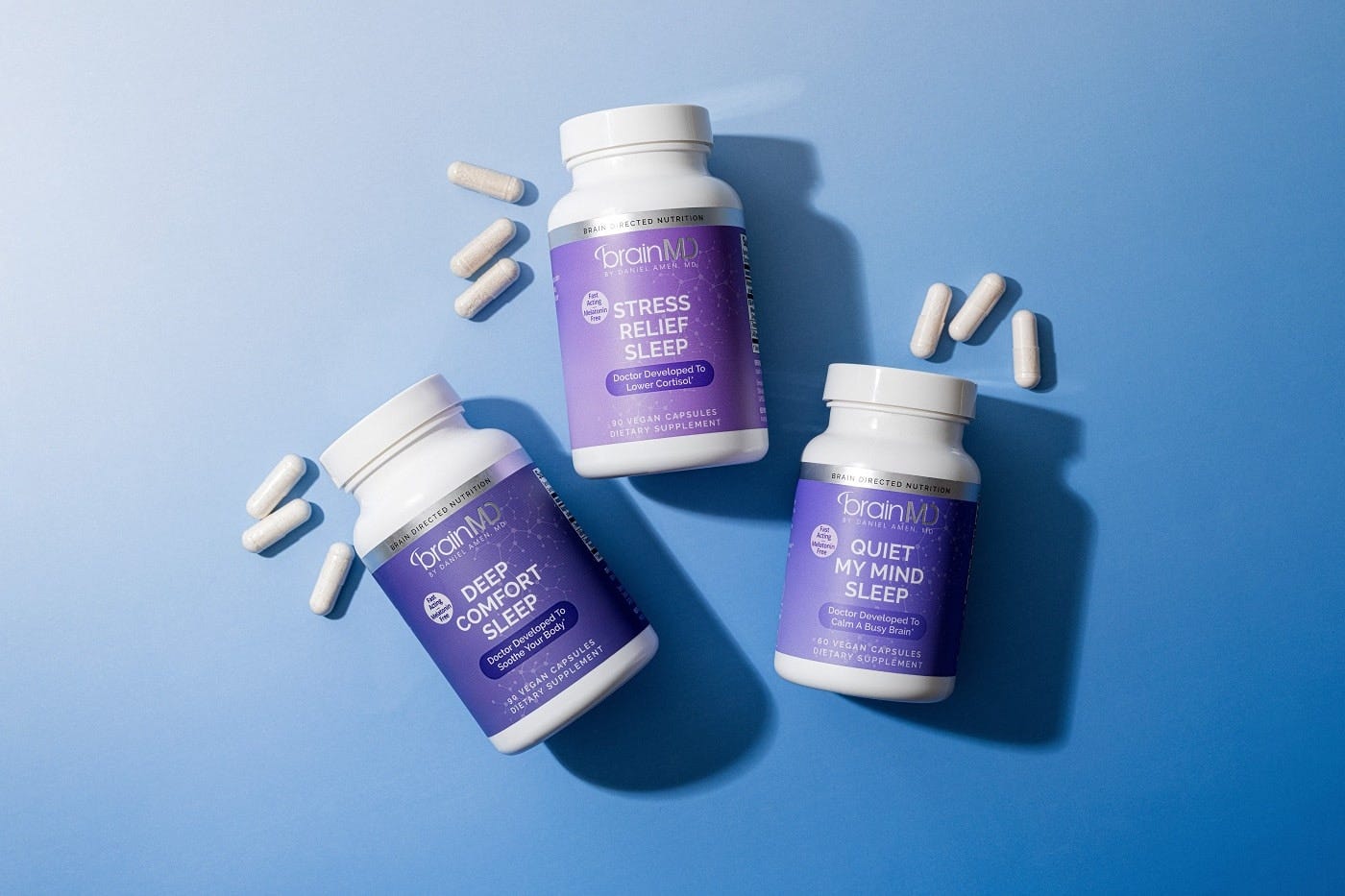
Did you know that getting less than seven hours of sleep a night has been associated with lower overall brain activity? It’s true! And this can negatively affect a whole range of issues such as weight, mood, memory, decision making, and more. In 1900, Americans averaged nine hours of sleep. According to a recent poll, Americans now average only six hours and forty minutes. The problem with this is that sleep deprivation causes lower activity in the prefrontal cortex and temporal lobes, affecting attention, judgment, impulse control, memory, and learning. Considering all of this, it is no surprise that sleep-deprived individuals struggle to maintain a healthy mood, memory, or body. Furthermore, in fascinating new research, scientists discovered that the brain has a special “waste management system” that works while you sleep to get rid of toxins. Without healthy sleep, the cleaning crew does not have enough time to do their job and trash build-ups, causing brain fog and memory problems. So what’s keeping YOU up at night? There seems to be an endless number of reasons why millions of us are missing out on a good night’s sleep. Here are some of the most common factors: A warm room Light in the bedroom Noise Gadgets by the bed Going to bed worried or angry Negative thoughts: ANTs (Automatic Negative Thoughts) tend to run through our mind when it’s not focused on anything else. Being sedentary: While it is well-known that those who exercise will sleep better, new research indicates that being sedentary actually interferes with good sleep. Medications: Many disturb sleep, including asthma medications, antihistamines, cough medicines, anticonvulsants, and stimulants. Caffeine: Too much coffee, tea, chocolate, or even some herbal preparations—especially when consumed later in the day or at night—can disrupt sleep. Alcohol, nicotine, and marijuana: Although these compounds initially induce sleepiness for some people, they have the reverse effect as they wear off, which is why you may wake up several hours after you go to sleep. Snoring: It can wake you, your sleep mate, or everyone in the house if it is really loud. Sleep apnea: With this condition, you stop breathing for short periods of time throughout the night, which robs you of restful sleep and leaves you feeling sluggish, inattentive, and forgetful throughout the day. Stressful events: The death of a loved one, divorce, a major deadline at work, or an upcoming test can cause temporary sleep loss. Having high-quality sleep is essential to wellness, although for some it can be elusive. If you avoid sleep robbers and practice good sleep hygiene, but still have problems falling asleep, a natural supplement that supports sleep may give you the relief you need. BrainMD has several natural supplement formulas that contain ingredients shown in clinical studies to help relax your body, calm your mind, and facilitate sustained and deep sleep. We recommend GABA Calming Support to calm a wound up and worried mind, Restful Sleep to help you fall asleep and stay asleep, and Serotonin Mood Support for running ANTs.
Learn more
How To Reset & Balance Your Brain
Your brain is an incredibly complicated machine. No one knows exactly how complex it is, but scientists estimate you have roughly 86 billion neurons and 85 billion nonneuronal brain cells. That means that in a piece of brain tissue the size of a grain of sand, you will find around 100,000 neurons, with over a billion synapses communicating with each other. Because of this, neuroscientists are faced with the incredible challenge of making sure this complex machine runs smoothly. This is often much easier said than done. Due to the brain’s complexity, many pharmaceutical drugs on the market today try to fix problems with a wide-brush approach, increasing levels of neurotransmitters like serotonin across the whole brain. Why Balance Is Important However, while this sweeping, pharmaceutical approach will often help in the battle with complex problems like depression and anxiety, there are almost always side effects. For a happy brain, more important than the levels of any one neurotransmitter is the overall balance of neurotransmitters in the brain as a whole. With such a massive amount of neurons and synapses firing at once, we need to ensure they are all working together properly, and that means making sure each brain cell has all the ingredients it needs to run smoothly. But, the balance of these incredibly important ingredients depends on a large number of factors; from your genes to your diet, to how much time you spend outside. And sometimes, especially in young people, this balance isn’t quite perfect. This can make life much more difficult, leading to irritable, anxious, unfocused parents and kids. What You Can Do There are some things you can do to help balance your brain; one way is through supplementation with nutrients that support the production and function of neurotransmitters. Here are some suggestions. GABA – an inhibitory neurotransmitter that helps calm overactive neurons, enhances mood and helps support restful sleep. 5-HTP – an extract from the African plant Griffonia Simplicifolia, 5-HTP is the precursor to the neurotransmitter serotonin, which plays a role in mood, sleep and appetite. L-Tyrosine – an important amino acid for the synthesis of many neurotransmitters, it is the precursor to norepinephrine and dopamine, which are important in balancing mood and energy. L-Glutamine – an amino acid important for the brain to make glutamate and GABA neurotransmitters. Glutamate is present in 80% of the brain’s nerve cell and plays a role in learning and memory processes as well as healthy mood management. Taurine – an amino acid that helps stabilize our nerve cell electrical activity and also promotes the performance of GABA and Glutamine neurotransmitter systems. There are also other essential vitamins and amino acids that will help your brain establish a healthy equilibrium. Look for products that combine multiple nutrients for a well-rounded approach to brain health, and make sure you buy from quality-driven brands. At BrainMD, we’re dedicated to providing the highest purity nutrients to give you the focus and energy you need to do the things you love most in life. For our full list of supplements, visit us at BrainMD.
Learn more
Go walNUTS For Your Brain’s Health
The incredible health benefits of walnuts have been making us nuts…in a good way. We owe our thanks to Mother Nature for giving us one of the best foods for our brains and longevity. It is no coincidence that brain shaped foods can provide optimal brain benefits. In fact, walnuts have almost twice as many antioxidants as other commonly consumed nuts such as almonds, peanuts, and pistachios. They are packed with a high concentration of DHA (a type of Omega-3 fatty acid) and polyphenols. Polyphenols play an important role in fighting free radicals and protecting your cardiovascular system. Omega-3’s are known to be one of the fundamental building blocks of the brain, critical for brain health in both infants and adults and have been studied to boost mood and improve cognition. In fact, in a recent study done by the University of New Mexico, they found that supplementation with walnuts seemed to have the ability to improve mood in healthy, non-depressed males. Women, you are not left out on the benefits of these little gems. A study in 2009 was done by Harvard where they studied 140,000 women over a ten-year period. They reported that the women who ate walnuts regularly trimmed their risk for developing type 2 diabetes up to 24% compared to those who ate them only on rare occasion. More Amazing Benefits Not only are walnuts inexpensive, convenient and packed with brain-benefits, they are also full of high-quality protein, vitamins, minerals, dietary fiber and can fall into a dairy-free, gluten-free, or a Mediterranean diet. If you are worried about the fat content of nuts or that they will cause weight gain, fear no more. Nuts contain healthful polyunsaturated and monosaturated fats, rather than saturated fats found in foods like butter. Plus, being protein and fiber packed, walnuts keep you full for longer periods of time, so you won’t be swayed to snack on unhealthy snacks that often cause unwanted or unintentional weight gain. You Don’t Need to Go Crazy The best part about all of these amazing characteristics of walnuts: you only need around 7 a day to reap all the health benefits they can offer! That’s right, you don’t need to go crazy, spending a fortune on your groceries and incorporating walnuts in bulk into every single meal. Just a handful each day will get you the benefits you want! Here are a few of Tana’s delicious recipes to include some walnuts into any meal, even dessert! Of course, we always love throwing a few on top of our salads for a quick and easy way to get our walnut fix. Sunrise Grainless Granola Happy Brain Halibut with Pesto Cream Sauce Find more great recipes from Tana for your brain-healthy life in The Brain Warrior’s Way Cookbook.
Learn more
3 Things All Vegans Should Know
So you’ve decided to go vegan, or maybe you’re still considering it, and you want to know if you can really be healthy and feel good without eating meat or other animal products. Truthfully, we have no interest in the food fight. The fact is there is research on both sides of that war. Our only goal is to help you be vibrant and have a healthy brain and body no matter what you decide is right for you. Here are 3 things to know if you decide to cut meat from your diet. You must know that the word “vegan” is not synonymous with “healthy”! Many vegans think that giving up meat will somehow give them super powers against illness. Unfortunately it’s not that simple. There are some key “essential” nutrients missing from a vegan diet. Essential means that your body doesn’t make them, they must be obtained through consumption, either your diet or supplements. This doesn’t mean there is no way to obtain them without eating meat, but it does mean that you need to be educated and conscious about what you consume. Know which nutrients are missing and most importantly, how you can obtain them while remaining true to your decision to be vegan. Here are some of the nutrients most commonly missing from a vegan diet and how to get them: Omega-3 fatty acids- for brain, heart, joints and anti-inflammation, improve cholesterol – Take algae-based Omega 3 DHAs, not flax oil Vitamin B-12- for nerve cells and mood – Take a good multi-vitamin containing Vitamin B-12 Iron- for healthy blood and energy (prevent anemia) – Take a Vitamin D supplement Vitamin D- for immunity and to help the body absorb calcium – Take a Vitamin D supplement Protein and branch chain amino acids- for muscle health and energy – Try OMNI Protein Powder Vitamin A- for the intestinal tract, the eyes and vision, lungs, healthy fetal development and a powerful immune system – Consume 6 times more beta carotene on a vegan diet (focus on bright red, orange and dark green foods) or take a good multi-vitamin containing Vitamin A (make sure it omits beta carotene because some people have trouble converting to Vitamin A) 9 of the 20 essential amino acids- the building blocks of life, our cells – They can be obtained through a very careful and purposeful vegan. However, Vegans are commonly susceptible deficiencies of: lysine, threonine, tryptophan, and methionine - Try OMNI Protein Powder Know which foods to choose: Consume plant-based protein at least 2x/ day: protein powder, organic tofu or tempeh (2-4) ounces is sufficient. Spinach is the best source of nearly complete vegetable protein Most legumes and grains actually contain compounds that are digestive inhibitors to protein, so I recommend limiting these. Quinoa is a complete protein, so it’s a great source. Lentils and beans have many of the amino acids though they’re incomplete Branch chain amino acids in powder form- can be added to water during workout. They are also in our OMNI Protein Powders. Just as important as it is to know what foods to include in your vegan diet, it is important to know what foods to leave out. There are many vegan foods that will actually steal your health. French fries, potato chips, white potatoes, rice, bread, candy bars and donuts are generally “vegan”. However, these foods will quickly increase inflammation and blood sugar, as well as your risk for anxiety, depression and brain fog. The healthiest vegans I know follow a more “raw” diet of unprocessed, lightly cooked whole food. They also understand what is missing from their diet, and how to obtain it through supplements where necessary. Whether vegan or not, the most important thing we can all do is educate ourselves and pay attention to what we put in our bodies.
Learn more