 Skip to content


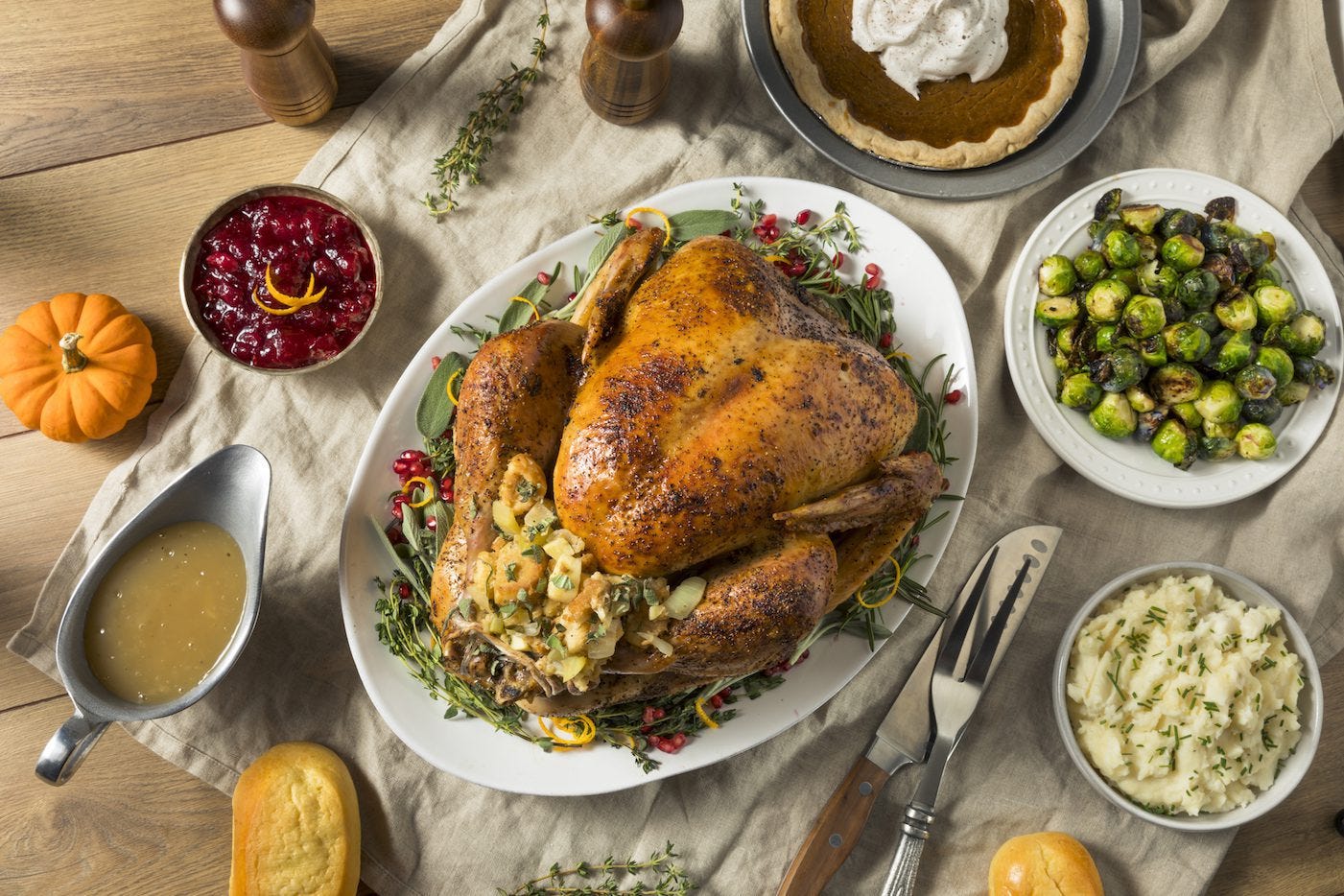
One of the main reasons we celebrate Thanksgiving is to express gratitude for the good things in our lives. Unfortunately, for millions of Americans, the focus on appreciation takes a back seat to gorging on high-calorie, sugar-laden foods. For many people, the Thanksgiving feast marks the beginning of a diet let up that can continue throughout the entire holiday season.
Dangers of Holiday Bingeing
A study by the Calorie Control Council concluded that the average American consumes as much as 4,500 calories and 229 grams of fat on Thanksgiving Day.¹ As reported by USA Today, that’s equivalent to 7 Burger King Whoppers or 15 Dairy Queen hot fudge sundaes.
Why does it matter? All these calories at once can overwhelm the digestive system and flood the body with unhealthy levels of carbs and fats. Plus, according to the National Institutes of Health,² the vast majority of people will never lose the weight they gain during the winter holidays.
The bad news: for people who are already overweight, their average weight gain per Thanksgiving meal can be 5 pounds or more, and many of these folks won’t lose their extra holiday weight either.
The worse news: these pounds can add up year after year, making holiday weight gain an important risk factor for many serious health concerns.
So, when it comes to holiday eating, is there any good news?
Yes!
With a little planning, you can avoid eating too much, and too many of the wrong foods, by adopting a healthy Thanksgiving menu. Let’s take a look at the typical Thanksgiving Day meal and see how we can make it healthier without losing the delicious flavors…

Here's How to "Healthify" Your Thanksgiving Menu
Main Dish
Traditionally, the main dish at a Thanksgiving Day feast is the turkey. This has changed over the years to include a broad array of meats including ham, duck, goose, and prime rib. Depending on where you live in the country, you might enjoy local game or seafood on Thanksgiving, such as quail, venison or Dungeness crab.
When it comes to turkey, there are many healthy and unhealthy ways to prepare the bird. It goes without saying that you shouldn’t deep-fat fry your turkey. For a healthy, exceptionally moist turkey, check out this recipe for Tana’s Marinated Turkey.
Core Essentials
Although there are a host of side dishes that can show up at a Thanksgiving Day feast, the two you’ll commonly find accompanying the main dish are stuffing and mashed potatoes/gravy.
Stuffing
If there’s one Thanksgiving dish that’s been customized more than any other, it’s stuffing. Seemingly, there are a million ways to make stuffing – with bread/croutons, sausage, nuts, fruits, potatoes, chorizo, bacon, crab, and the list goes on and on.
Here are just two ideas for how to prepare healthy stuffing: 1. To a quinoa/squash base, add chopped kale and diced apples (if preferred) and a pinch or two of rosemary. 2. To the same base, add mushrooms and chestnuts.
Mashed Potatoes
Unlike stuffing, preparing mashed potatoes is pretty straightforward. By now, many healthy alternatives to mashed potatoes have circulated cyberspace. Here are just a few you might consider for your Thanksgiving meal.
Instead of starchy potatoes, use mashed cauliflower instead. If you’re looking to diversify the color palette of your menu, mash up sweet potatoes. Or, instead of mashing sweet potatoes, try roasting them.
Sumptuous Sides
Here’s where you can really build a healthy Thanksgiving menu. Depending on traditions, regional influences or cultural preferences, the banquet table can be filled with a wide array of side options. Here are just a few:
Green Bean Casserole
A staple at many holiday gatherings, green bean casserole typically consists of canned green beans, cream of mushroom soup and French-fried onions. Occasionally, the recipe will be slightly altered to include sliced jalapeno peppers or cheddar cheese on top.
Here are a couple of healthy options for this popular casserole: skip the fattening soup and greasy onions and cook some fresh green beans with roasted garlic or onions. Or, try lemon and garlic roasted asparagus instead.

Brussels Sprouts
Though not the most universally appreciated Thanksgiving menu item, Brussels sprouts, along with other cruciferous vegetables, are extremely beneficial for you. Here’s a recipe that will turn your Brussels sprouts into Brussels shouts!
Cranberry Sauce
Due to their tart taste, cranberries are seldom eaten raw. This has invited many unhealthy presentations of the tiny red berries, which have become a delicacy during the holidays. Aside from being processed, canned cranberry sauce or jelly is typically loaded with sugar. A better option is to steam fresh cranberries and mash them. Or, for a low glycemic variation on traditional cranberry sauce, use monk fruit.
Roasted Vegetables
Most vegetables are rich in nutrients, high in fiber, and low in calories. Eating plenty of vegetables before the main dish or other sides is a great way to make sure you don’t overindulge during a holiday meal. For a colorful and flavorful side dish, try roasted rainbow carrots with fresh oregano.
Delectable Desserts
The dessert tray (or table) can be one of the greatest pitfalls to your health on Thanksgiving Day. It’s vital that you make a plan before you attend a party or family gathering where you know unhealthy foods will be served.

If you’re hosting a holiday get-together, make healthy desserts for your guests. Baked apples with cinnamon and nutmeg can make a delicious treat. Although pies are traditionally high calorie and loaded with sugar, it’s possible to make them healthier by using a nut crust with monk fruit filling and coconut whipped cream. Another healthy snack or dessert is cinnamon flavored chia pudding cups.
Even though these treats have some brain-healthy nutrients, they should be enjoyed as a snack. In other words, don’t make a meal out of them.
Eat Healthy, Be Happy!
Since it’s much easier to avoid holiday weight gain than it is to lose the pounds afterwards, keep a close eye on your caloric intake and try the above healthy Thanksgiving menu tips.
The BrainMD team wishes you and yours a safe, healthy and happy Thanksgiving!
At BrainMD, we’re dedicated to providing the highest quality supplements to improve your physical health and overall well-being. For more information about our full list of brain healthy supplements, please visit us at BrainMD.
*These statements have not been evaluated by the FDA. This content is for informational purposes only. It is not meant to substitute for medical or healthcare advice from a physician, nor is it intended to diagnose, treat, cure, or prevent any disease. Consult your healthcare provider before beginning a new health regimen.
References:
1. Calorie Control Council. (n.d.). Thanksgiving: The Battle of the Bulge. Retrieved November 17, 2025, from https://caloriecontrol.org/thanksgiving-the-battle-of-the-bulge/
2. Yanovski, J. A., Yanovski, S. Z., Sovik, K. N., Nguyen, T. T., O’Neil, P. M., & Sebring, N. G. (2000). A prospective study of holiday weight gain. New England Journal of Medicine, 342(12), 861–867. https://doi.org/10.1056/NEJM200003233421206


