That your body isn't working the way you'd like it to?
Less than fully positive about life?
If you answered yes to any of these questions, you may consider trying SAMe.
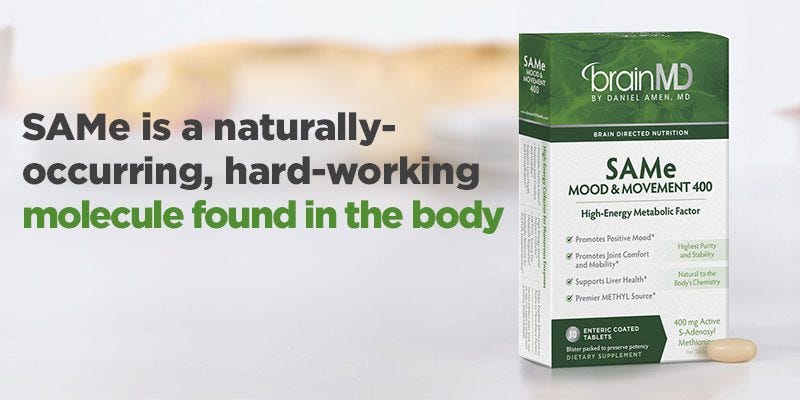
SAMe (S-Adenosyl-Methionine. Pronounced “sammy”) is a naturally-occurring, hard-working molecule that is found in almost every tissue and fluid in the body. It is organically produced in our bodies from the amino acid methionine in the presence of the cofactors B12 and folate, and is critical to brain and body health.
Healthy levels of SAMe support both mental well-being and healthy joints as SAMe plays a role in the synthesis of:
Neurotransmitters, critical to proper brain function
Melatonin, important to healthy sleep rhythms and outlook
Phospholipids, a major component of cell membranes
Polyamines, a manager of cellular growth
Additionally, it plays a key role in the biological process called methylation.
Methylation is a key process that is essential for almost all of your body systems and it occurs billions of times every second. It helps repair your DNA on a daily basis, controls unhealthy compounds that can damage blood vessels, helps recycle molecules that are needed for detoxification, helps maintain your mood, and keeps inflammation in check.
And without SAMe, there could be no methylation as we know it.
Normal aging, certain medications, toxins, daily stress, and various nutritional inadequacies in your diet (like poor protein intake) can deplete the body’s SAMe reserves and diminish the body’s production of SAMe.
Watch this short video featuring Dr. Amen and BrainMD Health’s Chief Science Officer, Dr. Parris Kidd, to learn more about the ways in which BrainMD Health’s SAMe Mood and Movement 400 promotes positive mood and emotional balance, enhances energy levels, and supports joint health and movement.
SAMe has been intensively researched for over half a century. Numerous controlled clinical trials support its benefits for mood, cognition, the joints, the liver, the gastrointestinal system, and the other organs.
Supplementing with the blister-packed tablets in SAMe Mood & Movement provides the S,S form of SAMe preferred by our enzymes, and helps ensure the body will have adequate SAMe for its needs.
You've probably heard the term "mindfulness."
It's one of the best ways to achieve a state of calm.
Mindfulness practices, such as yoga and tai chi, can help reduce anxious and depressive thoughts and increase focus and relaxation. Mindfulness also can help protect your brain and optimize brain function.
As the organ responsible for everything you are and everything you do, it's always smart to be more mindful of your brain. More…brainful.
If you’re looking to optimize your wellness, here are 12 natural ways to improve your health by putting your brain first…
12 Ways to Remain in a Brainful State of Mind
1. Know Your Brain Type
Just as identifying your abilities, interests, and skills can help you become a more well-rounded person, knowing your Brain Type can help you better understand who you are and why you do what you do. In addition to making you more mindful of your brain, these insights can potentially impact your future career and relationships in significant ways.
2. Mindful Mentality
One of the best ways to achieve a state of calm is with mindfulness. Mindfulness exercises can help reduce mood issues and increase well-being. Well-designed human studies show that daily mindfulness can help lessen stress¹ and improve overall brain health.
3. New Normal
Perhaps you've recently experienced lifestyle changes that have impacted your focus, sleep, and mood. Or, maybe the unique stressors of these uncertain times have impaired your ability to cope, making you feel completely overwhelmed much of the time. You can’t stop what’s happening around the globe, but you can change what’s going on inside your brain to prevent fear from dominating your life.
4. Daily Routine
An effective routine is to begin each morning by saying a positive affirmation like, “Today is going to be a great day!” Such a simple sentence can cause your brain to look for ways to fulfill that affirmative statement. It also establishes a healthy thought pattern you can continue throughout the day.
5. Self-care Basics
You’ve probably heard the expression “always take care of number one.” Although that saying might not be the best advice in business, team sports, relationships, or many other areas of life, it holds a great deal of significance when it comes to your personal health. In fact, how you treat your body and brain may well determine your ability to function in an increasingly stressful world.
6. Strong Connections
Social connections can significantly affect your brain, mood, and physical health.² The health habits of the people you spend time with can have a dramatic impact on your own health. It’s wise to surround yourself with people who are happy, upbeat, kind, and who challenge you to be the best version of yourself.
7. Avoid Unhealthy Foods
Proper nutrition is essential to optimal brain function. Unfortunately, the standard American diet is filled with toxic foods that increase your risk for mental and physical problems, as well as issues with your focus, mood, and memory.
Many of these unhealthy foods are:
Highly processed
Pro-inflammatory
Pesticide sprayed
Artificially colored and sweetened
High glycemic
Low fiber
Laden with hormones
Tainted with antibiotics
In place of these harmful foods, be sure to eat a healthy diet…one that includes lean protein, high fiber, and healthy fats. Also, it’s recommended that you eat 9 servings of fruits and vegetables every day.
8. Physical Activity
Physical activity is perhaps the single most important thing you can do to keep your brain healthy. Exercise can boost blood flow, deliver oxygen and other nutrients to the brain, and may increase your levels of dopamine. Walking at a brisk pace can help you clear your mind, decrease feelings of anxiousness, improve your mood, and burn some calories all at the same time.
9. Get Restful Sleep
Anything that disrupts your natural sleep pattern, like excessive caffeine, alcohol, or video game playing, can have adverse effects on your ability to perform tasks at work, school, or home. Insufficient and inconsistent sleep can increase irritability, moodiness, and poor judgment. To remain at the top of your game, and to be more mindful of your brain, be sure to get 7 to 9 hours of sleep each night.
10. Memory Support
One of the best ways to support your memory is to set aside some time every day for new learning. Examples: learning a new language or musical instrument, trying a new kind of dance or other complex physical activity, or taking up a new hobby like chess or painting. Researchers emphasize that the “use it or lose it” principle applies to the brain,³ so be intentional about learning new things.
11. Mood and Stress Relief
Often, there’s a correlation between being stressed out and experiencing occasional anxious thoughts or bouts of low mood. Stress can negatively affect your mood and keep your brain stuck in fight-or-flight mode. Also, stress can adversely impact the way your brain and body function, so it’s important for you to implement effective coping strategies.
12. Practice Gratitude
Research suggests that focusing on gratitude helps to calm the deep limbic areas and enhance the other judgment centers of your brain. People who express gratitude on a regular basis are healthier, more optimistic, make better progress toward their goals, have a greater sense of well-being, and are more helpful to others. Practicing gratitude first thing in the morning can improve your mood and promote feelings of contentment throughout the day.
Be More Mindful of Your Brain
Among the many benefits of practicing mindfulness is that it can help reduce stress and induce a state of calm. Also, it may increase your joy and give you a greater sense of purpose in life.
Applying these practical tips can help you become more mindful of your brain.
Take a few minutes and try one today!
At BrainMD, we’re dedicated to providing the highest purity nutrients to improve your physical health and overall well-being. For more information about our full list of brain healthy supplements, please visit us at BrainMD.
These statements have not been evaluated by the FDA. This content is for informational purposes only. It is not meant to substitute for medical or healthcare advice from a physician, nor is it intended to diagnose, treat, cure, or prevent any disease. Consult your healthcare provider before beginning a new health regimen.
References:
American Psychological Association. (n.d.). Mindfulness meditation: A research-proven way to reduce stress. Retrieved November 20, 2024, from https://www.apa.org/topics/mindfulness/meditation
Martino, J., Pegg, J., & Frates, E. P. (2017). The connection prescription: Using the power of social interactions and the deep desire for connectedness to empower health and wellness. American Journal of Lifestyle Medicine, 11(6), 466–475. https://doi.org/10.1177/1559827615608788
Cheng, M.-F. (2017). Adult neurogenesis in injury-induced self-repair: Use it or lose it. Brain Plasticity, 2(2), 115–126. https://doi.org/10.3233/BPL-160030