Questions To Get Rid of Automatic Negative Thoughts
- BrainMD Life
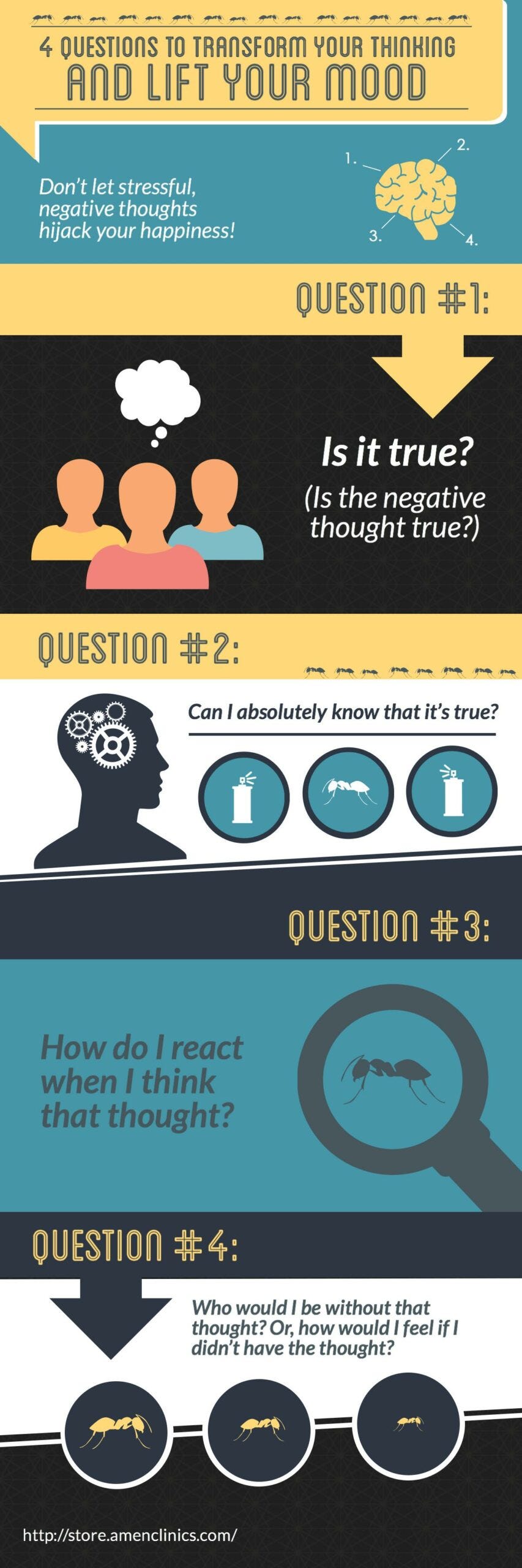
Don’t let stressful, negative thoughts hijack your happiness!
When the National Safety Council reports that as much as 80% of all disease and illness is initiated and aggravated by stress, it may make you take stress reduction more seriously.
But where does stress really begin? Unless we catch it where it starts, it's going to be challenging to combat it, right?
According to clinical neuroscientist, board certified psychiatrist, brain imaging expert, Dr. Daniel G. Amen, often, it is your AUTOMATIC NEGATIVE THOUGHTS (ANTs) that are the root of your stress.
Yes, what we think is powerful! And unfortunately, our thoughts lie – they lie a lot.
So, if you want to enjoy a vibrant, brain-healthy life, in addition to taking brain-healthy supplements, eating brain-smart foods, getting plenty of rest, water, and exercise – correcting your negative thinking to reduce your internal stress is key!
Sounds good. But how do you change your thoughts?
Good question!
Dr. Amen is a fan of a method developed by bestselling author and speaker Byron Katie, called the Work. The Work consists of writing down any bothersome, worrisome, or negative thoughts, then asking yourself four questions and doing what’s called a turnaround.
The goal of the Work isn’t pie-in-the-sky positive thinking; it is accurate thinking.
When we correct our ANTs, we reduce our stress, and it becomes easier to make better choices and lead brain healthy lives!
Here are the 4 questions to ask:
Is it true? (Is the negative thought true?)
Can I absolutely know that it is true?
How do I react when I think that thought?
Who would I be without that thought? Or, how would I feel if I didn’t have that thought?
Find out how one of Dr. Amen’s patients, Gina, used the Work when ANTs threatened to sabotage her efforts to lose weight before her wedding day…
Gina was hoping to lose weight before her wedding. After shedding some pounds initially, she gained a pound after the third week. She turned around a negative thought process that was triggered by the small weight gain by following the questions.
Question #1: Is it true that you will not lose weight in time for the wedding? “Yes,” she said.
Question #2: Can you absolutely know that it is true that you will not lose the weight in time for the wedding? Initially, she said yes. Then she said, “Well, maybe I will. Maybe this is just a temporary setback.”
Question #3: How do you feel when you have the thought, “I will never lose weight in time for my wedding? “I feel frustrated, and I feel like a failure. I’m afraid that I will be fat on my wedding day, “ she said.
Question #4: What would you be without the thought, “I will never lose weight in time for my wedding? “ She said, “I would just be happy that I’m getting married.” Turnaround: What is the opposite thought of “I will never lose weight in time for my wedding?” “I will lose weight in time for my wedding.”
Gina then felt a renewal of energy to keep watching what she ate rather than giving up on her diet.
You can begin reducing your stress by killing the ANTs and embracing more positive, accurate thoughts that guide you to make better choices and better brain health!
In our fast-paced world, there’s an overabundance of foods that are harmful to our health. While most people realize that eating a steady diet of hamburgers, French fries, and soft drinks isn’t beneficial for our health, the convenience of junk or fast food is a dangerous trap that many in our society fall into on a consistent basis.
The Diet Downfall
The standard American diet (SAD), or Western pattern diet (WPD), is filled with pro-inflammatory and allergenic foods, many of which are laced with artificial chemicals. This diet can damage and prematurely age your brain and increase your risk for many physical and mental issues.
The SAD diet is largely composed of unhealthy foods that Dr. Daniel Amen refers to as weapons of mass destruction. These foods are:
[wc_box color="inverse" text_align="left" margin_top="" margin_bottom=""]
Highly processed- essential nutrients lost
Pro-inflammatory- injurious to muscles, joints, and organs
Artificially colored and sweetened- toxic to the liver and other organs
High glycemic index- overworks the body’s sugar processing system
Low in fiber- robs probiotics of the food they need
Laden with hormones- can adversely affect the body’s delicate hormone balance
Pesticide sprayed- toxic to humans
Tainted with antibiotics- harmful to probiotics
[/wc_box]
This diet typically is high in sodium, refined sugars, omega-6 fatty acids, trans fats, and excess calories. It’s also low in the vitally important long-chain omega-3 fatty acids, EPA and DHA. People who maintain a diet loaded with simple carbohydrates (such as bread, pasta, potatoes, rice, fruit juices, and sugar) have an increased risk for problems with their digestive system, liver, pancreas, heart, circulation, and overall brain health.
A SAD Study
According to a recent study,¹ published by the Royal Society, consuming the SAD diet for just one week may decrease learning and increase desire to munch on junk food. For this trial, volunteers spent one week splurging on high-fat foods and sweet treats with high amounts of added sugar. The SAD diet led to worse performance on memory tests and an increased desire to overeat junk food after they had finished consuming a meal.
The researchers suggest that the typical Western diet – think high-glycemic foods like waffles and high-fat fare like milkshakes – can rapidly impair function in the region of the brain called the hippocampus. One of the brain’s major memory centers, the hippocampus is also involved in appetite regulation. Dysfunction in this area is associated with memory issues and troubles with appetite control.
This study is just the latest to confirm the strong relationship between what you put in your mouth and the moment-by-moment functioning of your brain. Its finding suggests a vicious cycle where eating junk food impairs hippocampal function and appetite control, which leads to craving more junk food, and so on. It helps explain why the SAD diet is contributing to widespread weight problems in America where approximately 70% of the population is overweight, and 40% fall into the obese category.
Fast Food, Low Mood
A fascinating recent study² revealed a new twist in the food/mood connection. Researchers went to two remote islands in Australia – one with plentiful fast food and lower fish consumption, the other without fast food, and higher fish consumption.
On the island with fast food, 16% of the people had moderate-to-severe mood issues, compared to only 3% on the island without fast food. That’s a 500% increased risk of low mood, based on diet. This study doesn’t prove fast food causes mood challenges, but it does suggest a suspicious connection.
Good Mood Foods
Making healthier choices in your diet can benefit your waistline, help lift your mood, and provide a long-lasting increase in energy and focus. Your brain requires foods that are high in vitamins, essential minerals, and other nutrients to help meet its huge energy requirements throughout the day.
Consider adding these good mood foods to your grocery list: fresh vegetables, fruits, seeds, nuts, berries, beans, free-range poultry, grass-fed meats, and wild-caught, cold-water fish. This diet tends to be higher in omega-3 fatty acids, folate, fiber, and many essential vitamins and minerals.
Brain Healthy Supplements
Due to the poor nutritional quality of the SAD diet, many people aren’t receiving proper nutrition from the foods they eat. Even those who eat a relatively healthy diet may find it challenging to get all the nutrients they need daily. By only eating foods, there will always be a gap in nutrition.
To help fill that gap, it’s essential to get energy-enhancing, stress-reducing nutrients. That’s where supplements come in. The reason they’re called supplements is because they supplement your diet with the nutrients you might be missing by fueling your body with food alone.
In a society where eating fast or processed food, consuming massive amounts of sugar, skimping on sleep, drinking too much caffeine and/or alcohol and not enough water, and consistently passing up on exercise has become the norm, supplements aren’t just a good idea, they’re critical to supporting and optimizing your health.
Daily Essentials
BrainMD has developed several products that are essential for everyone’s nutritional needs: our premium multivitamin, NeuroVite Plus Multivitamin, ultra-concentrated EPA and DHA fish oil, Omega-3 Power, and high-purity Vitamin D3 5000.
Our line of over 30 supplement products was designed to support a wide range of individual needs and is the only line of dietary supplements available today that was specifically developed to address the full spectrum of brain health concerns.
Never Too Late
Even if you’ve been eating the SAD diet your whole life, there is hope. Though eating junk food is bad for the brain, it’s never too late to start fueling your brain with healthy foods that boost brain function.
Feeding your brain and body with healthy foods, and high-quality, brain directed supplements, can provide tremendous nutritional health support for you and everyone in your family.
At BrainMD, we’re dedicated to providing the highest purity nutrients to improve your energy, focus, mood, stress, immunity, and overall well-being. For more information about our full list of brain healthy supplements, please visit us at BrainMD.
These statements have not been evaluated by the FDA. This content is for informational purposes only. It is not meant to substitute for medical or healthcare advice from a physician, nor is it intended to diagnose, treat, cure, or prevent any disease. Consult your healthcare provider before beginning a new health regimen.
References:
1. Stevenson, R. J., Francis, H. M., Attuquayefio, T., Gupta, D., Yeomans, M. R., Oaten, M. J., & Davidson, T. (2020). Hippocampal-dependent appetitive control is impaired by experimental exposure to a Western-style diet. Royal Society Open Science, 7(2), 191338. https://doi.org/10.1098/rsos.191338
2. Berger, M., Taylor, S., Harriss, L., Campbell, S., Thompson, F., Jones, S., Makrides, M., Gibson, R., Amminger, G. P., Sarnyai, Z., & McDermott, R. (2020). Cross-sectional association of seafood consumption, polyunsaturated fatty acids and depressive symptoms in two Torres Strait communities. Nutritional Neuroscience, 23(5), 353–362. https://doi.org/10.1080/1028415X.2018.1504429
When was the last time you did outer work?
Outer work may involve consistent exercise, proper nutrition, and quality sleep.
These healthy lifestyle factors address the physical elements of existence. However, there are also emotional, psychological, and spiritual aspects to consider.
So, when was the last time you did inner work?
Inner Work
The phrase “inner work” might initially deter some people since it conjures images of mystical trances or therapies such as hypnotism. The thought of doing “work” on one’s personality and psyche might be a tough sell for some. Though it may feel uncomfortable at first, inner work can bring about insight, inspiration, and personal growth.
Inner work is frequently overlooked in daily life. Perhaps this is because it’s often easier to evaluate physical results than emotional or psychological progress. Also, in a society preoccupied with physical appearance, outer work typically takes precedence over inner work in daily routines.
At its core, inner work is the process of getting to know yourself. It’s a form of introspective self-care where you can help yourself let go of harmful attachments, habits, people, and thoughts.
Negative Thoughts
Beliefs are powerful. Sadly, it’s common for people to believe things about themselves that just aren’t true.
The trouble with negative thinking is that it can distort perceptions of reality. When left unchecked, negative self-talk can create serious self-esteem and mood problems.
Have you ever had a limiting belief such as, “I’ll never be good enough?” When these thoughts occur, challenge them with questions like, “Is that really true?” Talking back to negative thoughts can help you retrain your brain, which will allow you to focus on the positive and leave the past where it is.
Overcoming negative self-talk is just one of many types of inner work you can do. Here are some helpful ways for you to become more mindful of your inner life…
10 Ways Inner Work Can Bring Peace & Purpose to Your Life
1. Just Breathe
Relaxation techniques can help you gain better control over stress and worry. Deep breathing is an effective therapy that can be done anywhere, anytime! Take deep breaths and let your mind and body start to relax.
A simple exercise to reduce stress is breathe in for 8 seconds; hold it for 8 seconds; breathe out for 8 seconds, and then hold it for 8 seconds. Repeat 4 times.
Try it. You should feel more focused and relaxed almost immediately.
2. One-Page Miracle
Clear and focused objectives are essential to achieving goals. The One-Page Miracle is a powerful exercise that can make a dramatic difference in your life.
Here are the simple steps:
On a piece of paper, write down the specific goals for each area of your life, including your health (physical, emotional, and spiritual), relationships, work/school, and finances. Post it where you’ll see it every day.
Ask yourself, “Is my behavior today getting me what I want?” Focusing on what’s important to you daily may make it easier for you to attain your goals.
3. Soothing Tunes
Listening to music raises dopamine levels, which can increase pleasurable feelings, improve mood, boost energy, and help with focus and concentration.
Remaining in a relaxed state of mind is easier to accomplish when you have a happy tune running through your head. Listen to brain enhancing music specifically composed to boost mood, gratitude, motivation, and inspiration.
4. Visit a Haven
Choose a haven – a place where you feel comfortable and that you can imagine with all your senses. If it’s the beach, visualize the ocean, feel the sand between your toes, and the warm sun on your skin. Your haven can be any real or imaginary place where you’d like to spend time.
During each session, choose one goal to work on. Stay with that goal until you can imagine yourself reaching it, going through each of the steps required to attain it. Begin to envision yourself not as you are, but as you want to be.
Spend at least 20 minutes a day on this refueling, life-changing exercise. You might be amazed at the results.
5. Practice Mindfulness
One of the best ways to achieve a state of calm is with mindfulness. Well-designed human studies show that daily mindfulness can help improve your brain.¹ Yoga, tai chi, and other mindfulness exercises can help reduce anxious and depressive thoughts and increase focus.
Many people think that yoga is just stretching. While stretching is certainly involved, yoga can help decrease stress. As with exercise, start with short periods of 5 or 10 minutes and work your way into longer sessions.
6. Write It Down
The process of journaling gives stressful thoughts a place to live other than your brain. Once those concerns have been expressed, they often lose their intensity and urgency, which will help you mentally relax. Writing in your journal 10 minutes before you go to bed can help relieve the worries of the day and put you in a restful state of mind.
7. Strong Connections
Social connections can significantly affect your brain,² mood, and overall well-being. Building and maintaining healthy relationships may help you feel understood and cared for. When you care for others and feel cared for, your brain releases oxytocin, the “bonding” hormone, which can counteract some of the negative effects of stress.
The health habits of the people you spend time with can have a dramatic impact on your own health. Surround yourself with people who are happy, upbeat, kind, and who challenge you to be the best version of yourself.
8. Practice Gratitude
Did you know that practicing gratitude actually makes your mind work better? People who express gratitude on a regular basis are healthier, more optimistic, make more progress toward their goals, have a greater sense of well-being, and are more helpful to others.
Write down three things you’re grateful for every day. Then, experience the joy that gratitude can bring.
9. Daily Meditation
Make time for yourself every day. Taking breaks for meditation and relaxation provides benefits for both your physical and mental health.
Spending just 15 minutes alone may refresh your mind. Clearing your mind and slowing your breathing can help restore inner calm.
Repeating simple words like “May I be safe and secure” can increase positive emotions and decrease negative ones. Loving Kindness Meditations (LKM) can reduce pain and improve other mental health challenges.
10. Reach Out for Help
Though isolating yourself during tough times may feel like the safest option, closing yourself off from the world can intensify negative feelings. Resist the urge to shut out the individuals who can offer you encouragement and support.
Reach out to friends and family and let them know when you’re emotionally overwhelmed. Seek professional help if necessary, but don’t fight your battles alone.
Find Your Quiet Place
A foundational element of inner work is seclusion. To clear your mind and attain a peaceful state, it’s important to shut out external distractions.
This includes turning off TVs, cell phones, and other devices. Also, it’s important to get away from loud traffic, noisy neighbors, or screaming kids. It might be best to find a place of solitude away from your home, at a park or other outdoor area.
Inner work can be a journey of self-discovery that allows you to look at your life honestly and objectively. There may be highs and lows along the way, but don’t give up. Many have found this process to be freeing and rewarding...even life-changing.
You may find that the results are well worth the investment, so set aside some time to focus on yourself today.
At BrainMD, we’re dedicated to providing the highest purity nutrients so you can do the things you love. For more information about our full list of brain healthy supplements, please visit us at BrainMD.
These statements have not been evaluated by the FDA. This content is for informational purposes only. It is not meant to substitute for medical or healthcare advice from a physician, nor is it intended to diagnose, treat, cure, or prevent any disease. Consult your healthcare provider before beginning a new health regimen.
References:
1. Khoury, B., Lecomte, T., Fortin, G., Masse, M., Therien, P., Bouchard, V., Chapleau, M.-A., Paquin, K., & Hofmann, S. G. (2013). Mindfulness-based therapy: A comprehensive meta-analysis. Clinical Psychology Review, 33(6), 763–771. https://doi.org/10.1016/j.cpr.2013.05.005
2. Holt-Lunstad, J. (2024). Social connection as a critical factor for mental and physical health: Evidence, trends, challenges, and future implications. World Psychiatry, 23(3), 312–332. https://doi.org/10.1002/wps.21224
What makes you happy?
Is it a place you often visit? Or chatting with a friend for hours on end? Or is it a favorite food or activity?
Many things can provide happiness in our lives. Unfortunately, there are also many things that can steal our happiness. Though everyone has their ups and downs in life, some people get stuck in a rut and need help getting out.
If you struggle with maintaining your focus and mood or just want to have more happiness in your life, you might consider trying BrainMD’s new mood-boosting saffron supplement, Happy Saffron Plus.
BrainMD's Happy Saffron Plus
This breakthrough nutraceutical formula was scientifically designed to promote a positive mood. It brings together nutraceutical preparations of the two most traditionally revered “happiness herbals” – saffron flower extract and curcumin from the turmeric root – with zinc, a mineral essential for life and vital for positive mood.
Why You Need It
In the U.S., nearly 1 in 5 people endure serious mood problems¹ and at least 1 in 4 experience significant feelings of anxiousness. Happy Saffron Plus was developed from clinical research with three nutraceuticals for brightening mood, coping with anxious feelings, and enhancing focus while under mental strain.
Benefits of Happy Saffron Plus
Based on the most current research, this supplement combines three potent nutraceutical ingredients to provide maximum mood support.
Based on considerable clinical and other scientific research, this formula offers:
Powerful support for positive mood
Increased capacity for coping with anxiousness
Enhanced alertness under stress
What’s in Happy Saffron Plus?
Here are the 3 ultra-pure, high-potency ingredients found in Happy Saffron Plus:
1. affron® Standardized Saffron Extract. Saffron has been the happiness spice in the Middle East for at least 2600 years. Modern clinical benefits fully support the traditional reverence for saffron. affron® is a water-extracted saffron concentrate standardized for its most active constituents. This extract has performed extremely well for improving mood and anxiousness, not just in adults but in adolescents, in clinical trials at a dose of 28 mg per day.
2. Longvida® Optimized Curcumin Extract. The turmeric root parallels saffron as an Asian happiness herbal for at least 2600 years. Curcumin is the molecular complex from turmeric root that improves mood. This Longvida® ingredient features excellent absorption² of curcumin and has worked well in clinical trials at 400 mg per day or higher.
3. Zinc, as Glycinate. This mineral is essential for the functioning of at least 300 enzymes essential for our life processes, and about 2000 different human proteins in all. People with mood problems typically have low blood levels and supplementing with zinc often enhances mood.
The combination of zinc with affron® saffron and Longvida® curcumin has the potential to elevate mood, perhaps even in individuals who don’t feel they have a mood problem. All three of these ingredients are documented to improve mood in controlled human clinical trials.
Happy Saffron Plus FAQ
[wc_box color="inverse" text_align="left" margin_top="" margin_bottom="" class=""]
How do I take Happy Saffron Plus?
We recommend adults take 3 capsules daily between meals.
Can children take this product?
Children ages 4-18 years can take 1 capsule per 40 pounds body weight, a maximum of 3 capsules daily.
Does this supplement contain allergens?
It is free from dairy, gluten, sugar, corn, nuts, eggs, yeast, and artificial flavorings or colorings. It does contain very small levels of soy (non-GMO).
Is Happy Saffron Plus suitable for vegans?
Yes. Happy Saffron Plus is suitable for vegans, especially those seeking to improve their mood.
Is it possible to get hooked on this product?
As with other BrainMD products, this is a dietary supplement, not a drug. It isn’t habit-forming.
I’m already taking a different BrainMD mood product. Do I need to discontinue that product before taking Happy Saffron Plus?
No. Happy Saffron Plus can be used in conjunction with any of BrainMD’s mood supplements.
[/wc_box]
Health & Happiness
Happier people tend to be healthier, live longer, have better relationships, and experience more success in life.
Boost your bliss with Happy Saffron Plus.
At BrainMD, we’re dedicated to providing the highest purity nutrients and standardized herbal ingredients to support your mood, focus and overall well-being. For more information about Happy Saffron Plus and our full list of supplements, please visit us at BrainMD.
*These statements have not been evaluated by the FDA. This content is for informational purposes only. It is not meant to substitute for medical or healthcare advice from a physician, nor is it intended to diagnose, treat, cure, or prevent any disease. Consult your healthcare provider before beginning a new health regimen.
References:
1. National Institute of Mental Health. (n.d.). Prevalence of mental illnesses. National Institute of Mental Health. https://www.nimh.nih.gov/health/statistics/mental-illness
2. Kuszewski, J. C., Wong, R. H. X., & Howe, P. R. C. (2018). Can curcumin counteract cognitive decline? Clinical trial evidence and rationale for combining ω-3 fatty acids with curcumin. Advances in Nutrition, 9(2), 105–113. https://doi.org/10.1093/advances/nmx013