 Skip to content


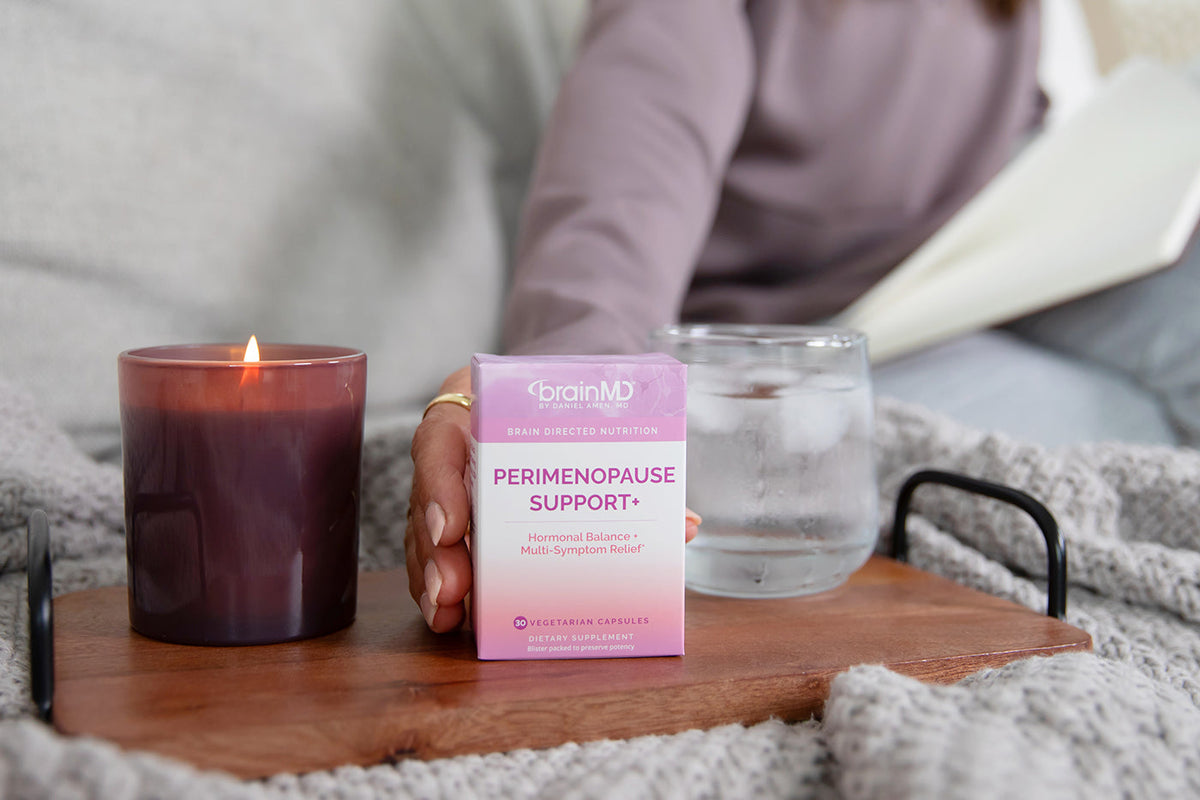
If you’ve been waking up at 3 a.m., suddenly anxious and sometimes drenched in sweat; walking into a room and forgetting why you went there; struggling to concentrate on tasks that used to come easily; or finding that minor frustrations have started to push you over the edge, you might be perimenopausal…
Perimenopause Support At-a-Glance
- Perimenopause affects your whole body, not just your periods.
- Common symptoms include hot flashes, poor sleep, brain fog, mood swings, and fatigue.
- Shatavari is a natural botanical with benefits to menopausal well-being.
- SheVari4™ helped reduce overall menopause symptom scores by 71% from baseline in an eight-week clinical trial.
- BrainMD Perimenopause Support+ combines five ingredients to support women's health during midlife.*
- Healthy habits like exercise, good sleep, and balanced nutrition can help you feel your best.
For millions of women, the hormonal transition leading up to menopause can come with a lot of frustrating and confusing symptoms. While hot flashes get most of the attention, they're only one piece of a much bigger picture.
Perimenopause can affect your brain, mood, sleep, energy, metabolism, sexual health, and overall well-being. Those symptoms sometimes begin years before you realize your hormones are changing.
Fortunately, there are ways to support your body during this transition. Along with healthy lifestyle habits and appropriate medical care, new research is highlighting the potential benefits of nutrients and botanical ingredients that may help women navigate midlife hormonal changes.
One ingredient attracting growing scientific interest is shatavari, a botanical traditionally used in Ayurvedic medicine for women's health. Recent clinical trials, including research on a standardized extract called SheVari4™, offer evidence for shatavari benefits for perimenopausal symptoms.
What Is Perimenopause, and Why Does It Affect Your Brain and Body?
Perimenopause means "around menopause." It's the transitional time before menstruation stops, when your ovaries begin producing estrogen and progesterone less predictably.
Most women enter perimenopause in their 40s, although symptoms can begin earlier. The transition may last several years, and ends when you've gone 12 consecutive months without a menstrual period (assuming there is no other medical cause).
Unlike menopause, when estrogen levels remain relatively low, perimenopause is characterized by significant hormonal fluctuations. Estrogen may rise one month and fall dramatically the next. Progesterone production can also become irregular [1].
These changes affect much more than your reproductive system.
Estrogen interacts with brain networks involved in memory, attention, mood, and temperature regulation [2,3]. It also influences bone remodeling, blood vessels, and vaginal tissues [4-6].
Progesterone and its metabolites interact with brain signaling systems involved in relaxation and sleep [7,8].
When these hormones fluctuate, the effects can ripple through nearly every aspect of daily life.
That's why comprehensive perimenopause support should consider the whole woman, not just her menstrual cycle.
10 Common Perimenopause Symptoms You Should Know
Every woman's experience is different. Some notice only mild changes, while others find that symptoms interfere with their careers, relationships, and quality of life.
1. Hot Flashes and Night Sweats
Hot flashes can feel like a sudden wave of heat spreading across your face, neck, and chest. They may be accompanied by sweating, flushing, and a racing heartbeat [9-11].
When they occur at night, they can disrupt sleep and leave you exhausted the following day.
2. Sleep Problems
You may struggle to fall asleep, wake repeatedly, or feel tired despite spending “enough” hours in bed [9-11].
Night sweats contribute to sleep disruption, but hormonal changes, stress, and other sleep disorders can also play a role.
3. Brain Fog and Forgetfulness
For many women, one of the most unsettling changes is feeling mentally less sharp.
You may forget names, lose your train of thought, or have difficulty concentrating.
Hormonal fluctuations, poor sleep, and stress can all contribute to cognitive complaints during perimenopause [9].
4. Anxiety, Irritability, and Mood Swings
You might feel unusually anxious, overwhelmed, impatient, or emotionally sensitive.
Hormonal changes interact with neurotransmitter systems involved in mood regulation. Sleep deprivation and everyday stress can make these changes more noticeable [9-11].
5. Fatigue and Low Energy
Persistent tiredness is common, particularly when sleep becomes fragmented [9,10].
However, fatigue may also be associated with thyroid disorders, iron deficiency, or other medical concerns, making proper evaluation important.
6. Irregular or Heavy Periods
Menstrual cycles may become shorter, longer, heavier, lighter, or less predictable [10,11].
Although these changes are common, unusually heavy bleeding or bleeding between periods should be discussed with a healthcare professional.
7. Vaginal Dryness and Intimate Discomfort
Changes in estrogen can affect vaginal lubrication, tissue elasticity, and comfort during intimacy. Some women also experience changes in libido or sexual satisfaction [9-11].
8. Joint and Muscle Discomfort
Aches, stiffness, and changes in physical recovery may become more noticeable during midlife.
Hormonal fluctuations may contribute, although other conditions can cause similar symptoms.
9. Weight and Metabolic Changes
You may notice changes in body composition, particularly increased abdominal fat [9].
Aging, hormonal changes, sleep disruption, and declining muscle mass can all contribute.
10. Changes in Bone Health
As estrogen levels decline around menopause, bone density can be impacted [9].
Unlike hot flashes or sleep problems, bone changes usually occur without obvious symptoms, making prevention especially important.
Other possible experiences include headaches, breast tenderness, heart palpitations, urinary changes, and skin or hair changes [9,11].
Perimenopause isn't one symptom or one hormonal event. It's a complex transition affecting multiple systems throughout the body.
Shatavari Benefits: Why Researchers Are Studying This Botanical
Shatavari (Asparagus racemosus) is a plant traditionally used in Ayurvedic medicine, particularly for women's reproductive health.
Its roots contain naturally occurring compounds called steroidal saponins, including shatavarins, which are currently under investigation for their biological effects.
Shatavari is often described as an adaptogenic botanical because of its traditional association with stress resilience. Researchers are also studying its potential estrogen-like activity, although the exact mechanisms and clinical significance remain under investigation [12].
SheVari4™: A Clinically Studied Shatavari Extract
Not all shatavari supplements are the same.
SheVari4™ is a standardized shatavari root extract containing 5% shatavarin IV, one of the plant's characteristic compounds.
Standardization helps ensure a consistent concentration of the identified botanical constituent.
In a randomized, double-blind, placebo-controlled clinical trial, researchers evaluated SheVari4™ in 60 women ages 40–55 across premenopausal, perimenopausal, and postmenopausal stages. Participants received either the extract or a placebo for eight weeks. [13]
Researchers used the Menopause Rating Scale (MRS), a validated questionnaire that measures 11 symptoms across three categories:
- Physical: Hot flashes, sweating, sleep problems, and joint discomfort.
- Psychological: Anxiety, irritability, low mood, and fatigue.
- Urogenital: Sexual concerns, urinary symptoms, and vaginal dryness.
The findings were encouraging.
What the SheVari4™ Clinical Trial Found
After four weeks, overall menopause symptom scores in the SheVari4™ group had decreased 43% from baseline. By eight weeks, scores had decreased 70.8% from baseline, while those in the placebo group saw an average increase in symptom scores [13].
The study evaluated several areas of well-being simultaneously, reflecting the reality that hormonal transitions often affect multiple aspects of women's lives.
Introducing Perimenopause Support+: Five Ingredients, One Daily Capsule
When you're experiencing changes in sleep, mood, energy, temperature regulation, and intimate comfort, addressing each concern separately can become overwhelming.
That's why BrainMD developed Perimenopause Support+, a dietary supplement combining five thoughtfully selected ingredients in one convenient daily capsule.
The formula is designed to provide nutritional and botanical support for multiple aspects of women's health during the hormonal transition.*
At its heart is clinically studied SheVari4™ shatavari extract, complemented by four additional ingredients.
Red Orange Complex: Antioxidant and Cellular Support
Red oranges (a.k.a. blood oranges) contain naturally occurring antioxidants, including anthocyanins and other polyphenols.
These compounds help support the body's defenses against oxidative stress, which occurs when reactive molecules exceed the body's ability to manage them.
A randomized, double-blind, controlled study published in Nutrients evaluated a standardized red orange extract in older adults, including measures related to oxidative stress and menopausal well-being [14].
Researchers reported improvements in certain self-reported measures, including nervousness and intimate-health concerns [14].
Trans-Resveratrol: Supporting Brain and Vascular Health
Trans-resveratrol is a polyphenol naturally found in grapes and certain berries.
It's been studied for its antioxidant properties and potential effects on vascular function and cognitive performance.
In a randomized, placebo-controlled trial involving 80 postmenopausal women, researchers investigated resveratrol supplementation over 14 weeks [15].
The findings suggested improvements in certain aspects of cognitive performance and cerebrovascular responsiveness [15].
Healthy circulation is essential for delivering oxygen and nutrients to the brain, making vascular health a priority during midlife.
Vitamin D3 and Vitamin K2: Supporting Strong Bones
Bone health deserves attention long before weak or brittle bones become a problem.
Vitamin D3 supports calcium absorption and normal bone metabolism, while vitamin K2 helps activate proteins involved in bone mineralization.
A 2022 systematic review and meta-analysis involving 16 randomized controlled trials and 6,425 participants evaluated vitamin K2 and postmenopausal bone health [16].
Researchers reported benefits to bone mineral density in the pooled analysis [16].
Together, vitamins D3 and K2 provide important nutritional support for maintaining healthy bones, particularly alongside adequate calcium intake and resistance exercise.*
How Long Does Perimenopause Support Take to Work?
When starting a new supplement, consistency matters.
In the SheVari4™ clinical trial, researchers observed changes in overall symptom scores at four weeks, with additional improvements reported at eight weeks [13].
We recommend taking one capsule of Perimenopause Support+ daily, preferably with food, or as directed by your healthcare provider.
Individual responses will vary.
A Few More Ways to Support Yourself During Perimenopause
Supplements work best as part of a comprehensive wellness routine.
Prioritize regular exercise, especially strength training, to maintain muscle and bone health. Eat adequate protein and fiber, maintain a consistent sleep schedule, and make time for stress-management practices that work for you.
Persistent or disruptive symptoms deserve medical attention. Menopausal hormone therapy, nonhormonal prescription options, and treatments for vaginal discomfort may also be appropriate depending on your health history and preferences.
Support Your Next Chapter With Confidence
Perimenopause can feel unpredictable, especially when changes in sleep, mood, energy, and concentration seem to happen all at once.
But this transition doesn't mean you have to ignore your health or simply push through every difficult day.
Emerging research on shatavari, including SheVari4™, is adding to our understanding of botanical support for women during midlife.
By combining clinically researched SheVari4™ with Red Orange Complex, trans-resveratrol, vitamin D3, and vitamin K2, BrainMD's Perimenopause Support+ offers a convenient daily option for supporting your brain, body, and overall well-being.*
One daily capsule. Five carefully selected ingredients. Support for your changing needs.*
[Explore BrainMD Perimenopause Support+]
Frequently Asked Questions
What are the earliest signs of perimenopause?
Changes in menstrual cycles are often among the earliest signs. Sleep disturbances, mood changes, breast tenderness, and hot flashes may also appear.
What are the main shatavari benefits for women?
Clinical research suggests certain shatavari extracts may support aspects of comfort and well-being during the menopause transition. Evidence is encouraging but remains preliminary.
Is shatavari a hormone?
No. Shatavari is a botanical ingredient, not estrogen or progesterone. However, some constituents may have estrogen-like biological activity.
Is Perimenopause Support+ hormone replacement therapy?
No. It's a dietary supplement formulated to support women's nutritional and wellness needs during hormonal change.*
References
- Santoro N. Perimenopause: From Research to Practice. Journal of Women's Health. 2016;25(4):332–339.
- Hara Y, Waters EM, McEwen BS, Morrison JH. Estrogen Effects on Cognitive and Synaptic Health Over the Lifecourse. Physiological Reviews. 2015;95(3):785–807.
- Maki PM, Thurston RC. Menopause and Brain Health: Hormonal Changes Are Only Part of the Story. Frontiers in Neurology. 2020;11:562275.
- Khosla S, Oursler MJ, Monroe DG. Estrogen and the Skeleton. Trends in Endocrinology & Metabolism. 2012;23(11):576–581.
- Mendelsohn ME, Karas RH. The Protective Effects of Estrogen on the Cardiovascular System. New England Journal of Medicine. 1999;340(23):1801–1811.
- Portman DJ, Gass MLS. Genitourinary Syndrome of Menopause: New Terminology for Vulvovaginal Atrophy from the International Society for the Study of Women's Sexual Health and the North American Menopause Society. Menopause. 2014;21(10):1063–1068.
- Schüssler P, Kluge M, Yassouridis A, Dresler M, Held K, Zihl J, Steiger A. Progesterone Reduces Wakefulness in Sleep EEG and Has No Effect on Cognition in Healthy Postmenopausal Women. Psychoneuroendocrinology. 2008;33(8):1124–1131.
- Belelli D, Lambert JJ. Neurosteroids: Endogenous Regulators of the GABA(A) Receptor. Nature Reviews Neuroscience. 2005;6(7):565–575. https://doi.org/10.1038/nrn1703
- Duralde ER, Sobel TH, Manson JE. Management of perimenopausal and menopausal symptoms. BMJ. 2023;382:e072612.
- Delamater L, Santoro N. Management of the Perimenopause. Clinical Obstetrics and Gynecology. 2018;61(3):419–432.
- Santoro N. Perimenopause: From Research to Practice. Journal of Women's Health. 2016;25(4):332–339.
- Alok S, Jain SK, Verma A, Kumar M, Mahor A, Sabharwal M. Plant Profile, Phytochemistry and Pharmacology of Asparagus racemosus (Shatavari): A Review. Asian Pacific Journal of Tropical Disease. 2013;3(3):242–251.
- Swaroop, A., & Swaroop, A. (2026). Asparagus racemosus Root Extract (SheVari4®) Alleviates Menopausal Symptoms in Pre-, Peri-, and Post-menopausal Healthy Women. Cureus, 18(4).
- Nobile, V., Pisati, M., Cestone, E., Insolia, V., Zaccaria, V., & Malfa, G. A. (2022). Antioxidant efficacy of a standardized red orange (Citrus sinensis (L.) Osbeck) extract in elderly subjects: A randomized, double blind, controlled study. Nutrients, 14(20), 4235.
- Evans HM, Howe PRC, Wong RHX. Effects of Resveratrol on Cognitive Performance, Mood and Cerebrovascular Function in Post-Menopausal Women: A 14-Week Randomised Placebo-Controlled Intervention Trial. Nutrients. 2017;9(1):27.
- Ma M, et al. Efficacy of vitamin K2 in the prevention and treatment of postmenopausal osteoporosis: A systematic review and meta-analysis of randomized controlled trials. Frontiers in Public Health. 2022;10:979649.
*These statements have not been evaluated by the Food and Drug Administration. This product is not intended to diagnose, treat, cure, or prevent any disease.
*The information in this article is provided for educational and informational purposes only and is not intended as medical advice, diagnosis, or treatment. Perimenopause symptoms and individual responses to dietary supplements can vary. The research discussed may involve specific ingredients, extracts, or dosages and does not necessarily reflect the effects of the finished Perimenopause Support+ formula. Always consult a qualified healthcare professional before beginning any new supplement, particularly if you are pregnant, breastfeeding, taking medications, have a hormone-sensitive condition, or are experiencing persistent or concerning symptoms.
